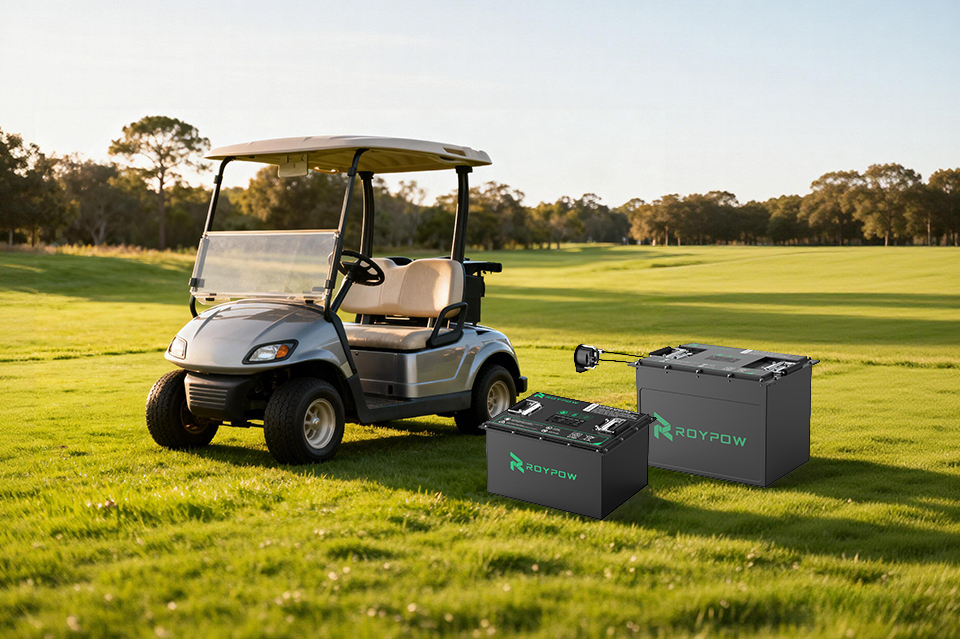
Your golf buggy shouldn’t be slowing you down before the back nine. Yet thousands of golfers are still hauling around lead-acid batteries that lose power mid-round, demand weekly maintenance, and need replacing every few years. The math just doesn’t add up.
Lithium golf buggy batteries last up to 10 years, weigh up to 70% less, and charge in a fraction of the time. The switch isn’t complicated. You just need the right information.
This guide covers everything, from how lithium stacks up against lead-acid to finding the right fit for your EZGO, Yamaha, or any other buggy.
Here’s what we’ll cover:
- Why lithium golf buggy batteries outperform lead-acid across every metric
- How to choose the right voltage and capacity for your specific buggy
- Brand-by-brand compatibility for EZGO, Yamaha, and more
- Real costs, charging habits, and what affects your battery’s lifespan
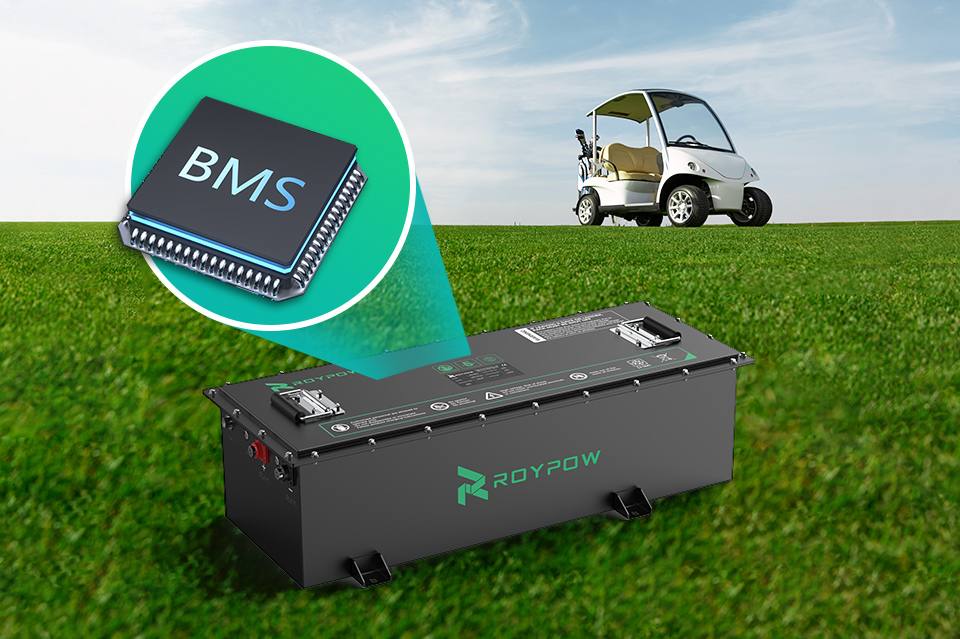
- How the built-in BMS quietly protects your investment on every single charge
ROYPOW builds LiFePO4 golf buggy batteries with automotive-grade cells, an intelligent BMS, and drop-in compatibility across all major buggy brands. If you’re in the market, they’re worth a serious look.
Why Lithium Golf Buggy Batteries Outperform Lead-Acid Across Every Metric
Lead-acid had its time. But that time is over.
If your buggy is running on lead-acid batteries, you already know the drill: watering them weekly, watching the power fade on the back nine, and replacing the whole pack every few years. It’s a cycle that costs you time, money, and patience.
Lithium iron phosphate (LiFePO4) breaks that cycle entirely. Here’s how the two stack up, side by side.
|
Metric |
Lead-Acid |
Lithium (LiFePO4) |
|
Lifespan |
300-500 cycles |
2,000-4,000+ cycles |
|
Charge time |
8-10 hours |
2-4 hours |
|
Weight (48V setup) |
300+ lbs |
50-70% lighter |
|
Maintenance |
Weekly watering, terminal cleaning |
Zero |
|
Power consistency |
Fades as charge drops |
Steady until nearly empty |
|
Lifespan (years) |
2-4 years |
8-10+ years |
The weight difference alone is worth pausing on. A typical 48V lead-acid setup can tip the scales at over 300 lbs. Lithium cuts that by more than half, which means:
- Better acceleration and handling
- Less stress on your buggy’s motor and frame
- Gentler on turf (a win for course managers and club fleets)
The Power Delivery Difference
This one catches people off guard. Lead-acid batteries drop voltage as they discharge. So by hole 14, your buggy is noticeably slower. Lithium holds a flat, consistent voltage right up until the battery is nearly depleted. You get the same punch on the last hole as on the first.
What About the Price Tag?
Yes, lithium costs more upfront. A lead-acid set runs roughly $600-$1,500. Lithium sits at $1,500-$3,000. But factor in zero maintenance, half the replacement cycles, and a decade-long lifespan, and lithium is cheaper over time. Not eventually. Significantly.
ROYPOW’s LiFePO4 golf buggy batteries are built with an intelligent BMS that handles overcharge protection, cell balancing, and temperature management automatically. No babysitting required.
How to Choose Voltage and Capacity
Getting the voltage wrong is the single most common mistake people make. Your new lithium battery must match your buggy’s existing voltage system. No exceptions.
Step 1: Find your system voltage.
Lift the seat panel and count the batteries. Multiply the individual battery voltage by the number of batteries to get your total. For example:
- 6 x 6V = 36V system
- 6 x 8V or 4 x 12V = 48V system
- 6 x 12V = 72V system
Step 2: Pick the right voltage for your use case.
|
Voltage |
Best For |
Top Speed |
|
36V |
Older models, flat courses, light casual use |
~12-14 mph |
|
48V |
Most modern buggies, daily use, hilly terrain |
~20-25 mph |
|
72V |
Heavy-duty, commercial fleets, off-road |
~25-30 mph |
48V is the sweet spot for most owners. It balances power, efficiency, and broad compatibility with today’s controllers and chargers. ROYPOW’s 48V lithium golf cart batteries are drop-in ready for most modern buggies, no rewiring required.
Step 3: Choose your capacity (Ah).
Think of amp-hours like a fuel tank. More Ah means more range per charge.
- 80-100Ah – Casual weekend golfers, flat 9-hole courses
- 105Ah – The sweet spot for most owners (36-50 miles per charge on moderate terrain)
- 160Ah+ – Daily commercial use, hilly courses, buggies with accessories
If you’re on a 36V system, ROYPOW also offers purpose-built 36V lithium golf cart batteries to match. And for high-performance setups, the 72V system handles the heaviest loads without breaking a sweat.
Pro tip: Don’t just buy the biggest Ah you can find. An oversized pack adds weight and cost without meaningful benefit if your terrain and usage are moderate.
Brand-by-Brand Compatibility
The good news: modern LiFePO4 batteries are designed to be drop-in replacements for all major buggy brands. The voltage compatibility works by design. A 38.4V LiFePO4 pack slots into any 36V controller. A 51.2V pack works with all standard 48V systems. No modifications needed in most cases.
Here’s a quick compatibility overview by brand:
EZGO
EZGO buggies span a wide range, from classic TXT models to the modern RXV. Most run on 36V or 48V systems.
- TXT (older models): 36V, uses six 6V batteries. A single lithium pack replaces all six.
- RXV: 48V, four 12V batteries. Note: the RXV has regenerative braking, so verify your lithium pack’s BMS supports power input from regeneration before buying.
- Freedom series: 48V, straightforward drop-in swap.
ROYPOW’s LiFePO4 packs are compatible with EZGO systems. Check the EZGO-specific battery page for your exact model fit.
Yamaha
Yamaha electric buggies are some of the most reliable on the market, and lithium upgrades slot in cleanly across most models.
- G-series (G16, G19, G22): Span both 36V and 48V depending on year.
- Drive / Drive2: 48V systems. Clean plug-and-play lithium swap.
- UMAX utility carts: 48V, ideal for higher-capacity packs (160Ah+) given the heavier workloads.
Browse the Yamaha-compatible battery options on ROYPOW’s site for a direct model match.
Club Car and Others
Club Car’s Precedent, Tempo, and Onward all run 48V systems with varying BMS communication setups. Newer Club Car models use CAN-bus communication between the battery and controller, so confirm your lithium battery’s BMS can handle that signal. ROYPOW’s intelligent BMS is built for exactly this kind of compatibility.
For non-standard or lesser-known brands, browse other model compatibility or reach out for a direct recommendation.
Real Costs, Charging, and Lifespan
The upfront sticker shock is real. But the lifetime math tells a different story.
|
Cost Factor |
Lead-Acid (10 years) |
Lithium (10 years) |
|
Initial battery cost |
$600-$1,500 |
$1,500-$3,000 |
|
Replacements needed |
2-3 times |
0-1 times |
|
Maintenance costs |
Ongoing |
Near zero |
|
Estimated 10-year total |
$2,500-$5,000+ |
$1,500-$3,000 |
Lithium wins. Significantly.
Charging Habits That Actually Matter
You don’t need to overthink charging. A few smart habits go a long way:
- Charge after every use, not just when the battery is low. Shallow cycles extend lifespan.
- Never drain to zero. Deep discharges below 20% repeatedly will degrade capacity faster.
- Use a lithium-specific charger. A lead-acid charger cannot safely charge lithium. ROYPOW’s golf cart battery charger is matched to their LiFePO4 chemistry for optimal charge profiles.
- Avoid charging in extreme cold. Below 0°C (32°F), charging can permanently damage cells. Most quality batteries disable charging automatically at this threshold.
- Store at 50-70% charge if the buggy is sitting unused for weeks.
What Affects Lifespan Most
A quality lithium golf buggy battery lasts 8-12 years or 3,000-5,000+ charge cycles. But not all lithium batteries are equal. What really separates a 4-year battery from a 12-year one:
- Cell quality – Automotive-grade LiFePO4 cells (like ROYPOW uses) are far more stable than budget-grade alternatives.
- BMS sophistication – A smarter BMS means better cell balancing, longer life.
- Depth of discharge habits – Partial cycling always beats full drain cycles.
- Operating temperature – Consistent extreme heat accelerates cell aging.
For a deeper breakdown of how lithium battery economics work in industrial applications, the forklift battery cost comparison guide on ROYPOW’s blog shows the same TCO principles at scale.
How the BMS Protects Your Investment
Most people hear “Battery Management System” and glaze over. Fair enough. But understanding what it actually does changes how you think about battery value.
The BMS is the brain inside your lithium pack. It runs continuously, every second your battery is in use or on charge. And it’s doing a lot.
Here’s what it quietly manages on every single ride:
- Overcharge protection – Cuts charging before voltage exceeds safe limits
- Over-discharge protection – Stops the battery before it drains to a damaging level
- Cell balancing – Keeps each individual cell in the pack at an equal charge level (critical for long-term capacity)
- Temperature monitoring – Detects heat buildup and throttles output before damage occurs
- Short-circuit protection – Instantly cuts power if an abnormal current spike is detected
Without a quality BMS, none of the above happens automatically. A cheap battery with a weak BMS might look fine for 18 months. Then it fails fast, hard, and outside the warranty window.
ROYPOW’s intelligent BMS goes further than basic protection. It supports real-time monitoring via Bluetooth on compatible models, meaning you can check your battery’s state of charge, voltage, and temperature from your phone before you even leave the driveway.
Think of the BMS as the silent mechanic that never calls in sick.
Pro tip: When comparing lithium batteries, always ask about the BMS specs, not just the Ah rating. A 100Ah pack with a weak BMS will underperform a well-managed 80Ah pack every time.
For more on how lithium battery technology applies across heavier-duty equipment, see the lithium vs lead-acid comparison breakdown on ROYPOW’s site. The core principles carry across every application.
Your Buggy Deserves Better. ROYPOW Delivers.
The switch to lithium golf buggy batteries is one of those decisions that pays you back every single round. Less weight, more range, zero maintenance, and a lifespan that outlasts the cart itself. Once you make the switch, going back simply isn’t an option.
Here’s what to take away from this guide:
- LiFePO4 is the chemistry that matters. Not all lithium is created equal.
- Match your voltage first (36V, 48V, or 72V) before anything else
- 48V 105Ah hits the sweet spot for most buggy owners
- Lithium costs more upfront but saves significantly over a 10-year window
- Smart charging habits (shallow cycles, right charger, avoid deep drain) directly extend lifespan
- The BMS is just as important as the Ah rating. Don’t overlook it.
- EZGO, Yamaha, Club Car, and most major brands have clean drop-in compatibility
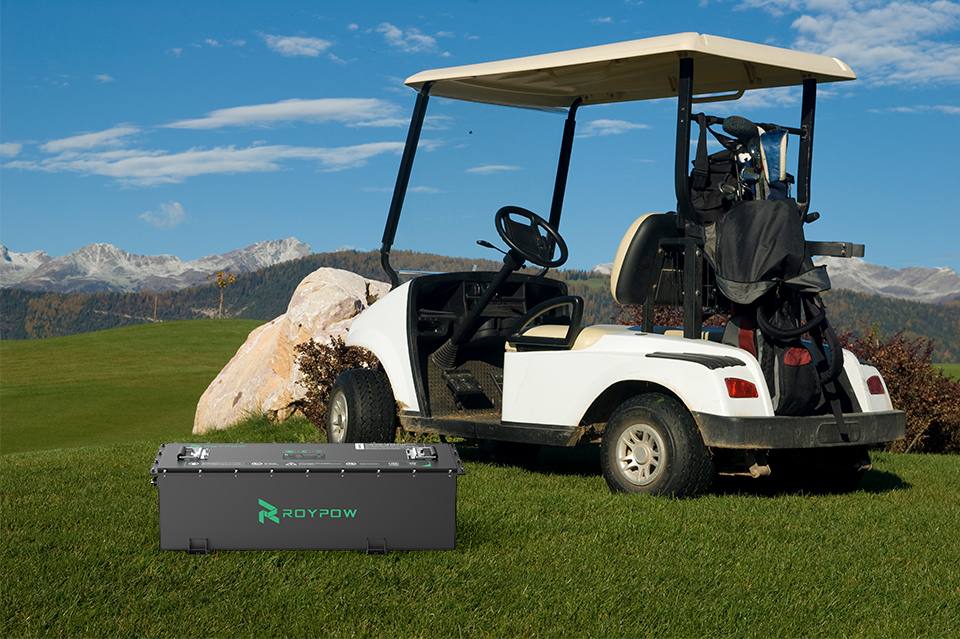
ROYPOW builds LiFePO4 golf buggy batteries with automotive-grade cells, an intelligent BMS, and drop-in compatibility across all major buggy brands. Whether you’re riding 9 holes on weekends or running a commercial fleet seven days a week, there’s a ROYPOW pack sized for your exact setup, with the certifications and engineering to back it up. Browse the full golf cart battery range and find your fit.
Frequently Asked Questions
Is a lithium battery good for a golf cart?
Yes. Lithium batteries last longer, weigh less, charge faster, and need zero maintenance compared to lead-acid. They’re the superior choice for most golf cart owners.
How much is a lithium battery for a golf buggy?
Expect to pay $1,500-$3,000 upfront. Over 10 years, lithium costs significantly less than repeatedly replacing lead-acid packs.
Can I replace golf cart batteries with lithium?
Yes. Most modern LiFePO4 packs are drop-in replacements. No rewiring needed for EZGO, Yamaha, Club Car, and other major brands.
How many lithium batteries to run a golf cart?
Typically one. A single lithium pack replaces multiple lead-acid batteries, simplifying your setup while delivering more range and consistent power.
What are the disadvantages of lithium golf cart batteries?
Higher upfront cost and charger compatibility requirements. Some older carts may need a lithium-specific charger before switching.
How many years will a lithium golf cart battery last?
A quality LiFePO4 golf cart battery lasts 8-12 years, or 3,000-5,000+ charge cycles, with proper charging habits.