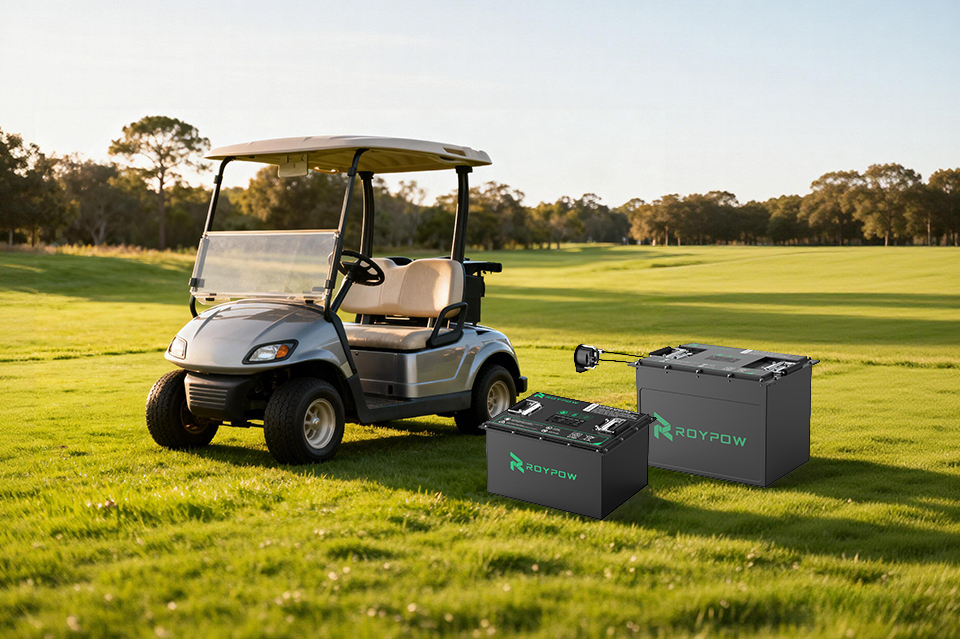
Fast Answer: What Does a Club Car Battery Replacement Cost in 2026?

For the global world market in 2026, a Club Car battery replacement typically costs from about USD 850 to USD 2,600 for traditional flooded lead-acid batteries, USD 1,200 to USD 3,200 for AGM batteries, and USD 1,700 to USD 5,800 for LiFePO4 lithium batteries, depending on voltage, capacity, brand, charger compatibility, installation requirements, shipping, taxes, and whether the cart is a Club Car DS, Precedent, Tempo, or Onward. In many regions, a basic 48V lead-acid replacement remains the lowest upfront option, while a 48V lithium conversion is often the best long-term value because it can reduce maintenance, weight, charging time, downtime, water usage, and repeat replacement cycles.
The short version is simple: if you need the lowest purchase price today, lead-acid may still fit. If you operate a golf course, resort, gated community, campus, commercial maintenance fleet, or high-use personal cart, lithium usually becomes more economical over several years. The break-even period often falls between two and five years, depending on daily driving distance, electricity rates, labor costs, battery care discipline, and how often lead-acid packs are replaced in your climate.
A realistic Club Car battery budget should not stop at the battery pack. Buyers should also include the cost of a compatible charger, installation labor, cables, hold-down trays, state-of-charge display, possible Onboard Computer bypass for certain older Club Car models, freight, import duties, recycling fees, and downtime. In port-driven markets such as Los Angeles, Rotterdam, Hamburg, Dubai, Singapore, Durban, Santos, Melbourne, Busan, and Yokohama, landed cost can vary significantly even when the battery list price looks similar.
| Replacement Type | Typical 2026 Global Price Range | Best For | Main Advantage | Main Limitation | Expected Service Life |
|---|---|---|---|---|---|
| Flooded lead-acid 36V | USD 850–1,700 | Older DS carts and light personal use | Lowest upfront cost | Watering, corrosion, weight | 3–5 years |
| Flooded lead-acid 48V | USD 1,100–2,600 | Standard Precedent and Tempo replacement | Widely available | Performance drops as charge falls | 3–5 years |
| AGM 48V | USD 1,600–3,200 | Users wanting sealed lead-acid | Less maintenance than flooded | Still heavy and shorter-lived than lithium | 4–6 years |
| LiFePO4 36V | USD 1,700–3,800 | Older Club Car DS lithium conversions | Lower weight, faster charging | May require charger update | 8–10+ years |
| LiFePO4 48V | USD 2,000–4,800 | Most modern Club Car carts | Strong ROI and low maintenance | Higher initial investment | 8–10+ years |
| LiFePO4 72V | USD 3,200–5,800+ | High-performance Onward and utility carts | Power, efficiency, range | Specialized components may be needed | 8–10+ years |
This table shows why the “battery price” question should be treated as a total ownership question. A flooded pack may be inexpensive on day one, but if it needs replacement twice during the same period that one lithium pack remains in service, the total cost can shift quickly. For fleet managers, the cost of labor and vehicle downtime often matters as much as the invoice price.
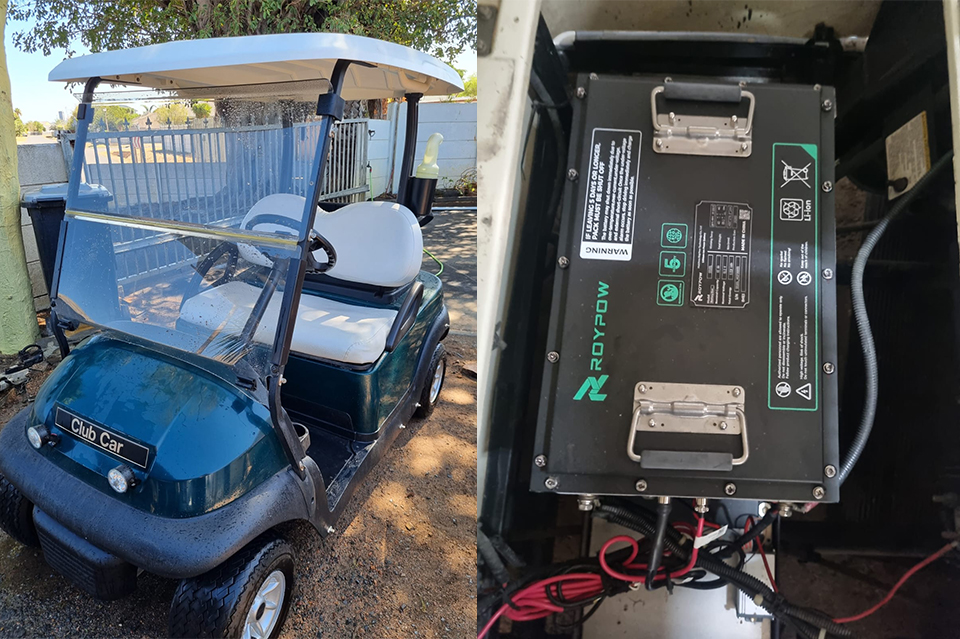
Club Car Battery Prices by Model: DS, Precedent, Tempo, and Onward

Club Car battery replacement cost depends heavily on the model and original electrical system. A DS from the 1990s or early 2000s may use a 36V or 48V layout with multiple 6V, 8V, or 12V lead-acid batteries. A Precedent is commonly found with a 48V system. Tempo and Onward models are often 48V, while some performance or utility configurations may use 72V systems. Before pricing batteries, confirm the cart’s voltage, controller rating, charger port, battery compartment dimensions, and current cable condition.
In North America, especially in golf-heavy regions such as Florida, Arizona, South Carolina, California, and Ontario, battery availability is generally strong and dealer competition keeps pricing transparent. In Europe, Club Car fleets are common around resorts and golf destinations in Spain, Portugal, France, Germany, the Netherlands, and the United Kingdom; logistics through Rotterdam, Hamburg, Antwerp, and Felixstowe can affect landed cost. In Asia-Pacific markets such as Singapore, Japan, Korea, Thailand, Indonesia, and Australia, lithium adoption is rising due to maintenance savings and sustainability requirements at resorts, universities, industrial parks, and airports.
| Club Car Model | Common Voltage | Typical Battery Layout | Lead-Acid Replacement Range | Lithium Replacement Range | Buyer Notes |
|---|---|---|---|---|---|
| Club Car DS 36V | 36V | Six 6V batteries or lithium equivalent | USD 850–1,700 | USD 1,700–3,800 | Check age, OBC, cables, and tray corrosion |
| Club Car DS 48V | 48V | Six 8V batteries, four 12V batteries, or lithium | USD 1,100–2,500 | USD 2,000–4,800 | Popular for lithium upgrades |
| Club Car Precedent | 48V | Six 8V, four 12V, or single/multiple lithium modules | USD 1,200–2,600 | USD 2,000–4,800 | Verify charger compatibility before purchase |
| Club Car Tempo | 48V | Lead-acid pack or lithium conversion | USD 1,300–2,700 | USD 2,100–5,000 | Common in rental and golf course fleets |
| Club Car Onward 48V | 48V | Deep-cycle lead-acid or lithium | USD 1,400–2,800 | USD 2,200–5,200 | Often used with accessories that increase load |
| Club Car Onward HP or utility | 48V or 72V | Higher-output lithium or specialty pack | USD 1,800–3,200 | USD 3,200–5,800+ | Match battery discharge rating to controller demand |
The explanation behind these numbers is that model age and configuration influence the amount of conversion work required. A newer cart with a modern charger, clean cables, and sufficient battery bay space is easier to upgrade. An older DS may need cable replacement, tray repair, OBC bypass, or a new meter. A customized Onward with lights, sound system, lift kit, rear seat, cargo box, or utility attachments may need a higher-capacity battery to maintain range.
For many 36V carts, owners compare new lead-acid batteries with 36V Golf Cart Batteries because lithium can bring an older cart back to useful service while reducing weight. For mainstream 48V Club Car Precedent, Tempo, and Onward models, 48V Golf Cart Batteries are the most common lithium upgrade category. Higher-voltage platforms and performance applications may require 72V Golf Cart Batteries designed for the correct discharge profile.
Lead-Acid, AGM, and LiFePO4: Upfront Cost Breakdown

Battery chemistry is the biggest pricing variable. Flooded lead-acid batteries remain familiar and widely stocked. They are usually sold as individual deep-cycle batteries that are wired in series to create the cart voltage. AGM batteries are sealed lead-acid batteries that reduce watering needs but remain heavy and sensitive to deep discharge. LiFePO4 lithium batteries use a different chemistry with higher usable capacity, lower weight, faster charging, longer cycle life, and integrated battery management systems in quality products.
For buyers comparing upfront price only, lead-acid often appears cheaper. However, a 48V lead-acid pack may only deliver around 50% usable capacity if the owner wants reasonable life, while a quality LiFePO4 pack can often use a much higher percentage of rated capacity. This means two packs with similar amp-hour labels may not perform equally in real-world driving. Lithium also maintains voltage more consistently, so the cart feels stronger throughout the discharge cycle rather than slowing noticeably near the end of the day.
AGM sits between flooded lead-acid and lithium. It is cleaner and requires less routine maintenance than flooded lead-acid, but the price gap between AGM and LiFePO4 has narrowed in many markets. In 2026, many commercial buyers skip AGM unless they have a specific reason to remain with sealed lead-acid, such as existing procurement rules or compatibility restrictions.
| Chemistry | Upfront Cost | Maintenance | Weight | Charging Behavior | Best Use Case |
|---|---|---|---|---|---|
| Flooded lead-acid | Lowest | High: watering, cleaning, equalization | Very heavy | Slow, heat-sensitive, voltage sag | Low-use carts with tight budgets |
| AGM lead-acid | Medium | Low to medium | Heavy | Cleaner charging but still limited cycle life | Users wanting sealed batteries without lithium |
| Gel lead-acid | Medium to high | Low | Heavy | Requires correct charging profile | Specialty applications with low vibration |
| LiFePO4 lithium | Highest initial cost | Very low | Much lighter | Fast, efficient, stable voltage | High-use personal and commercial carts |
| Low-cost generic lithium | Medium to high | Low, but quality varies | Light | Depends on BMS and charger quality | Only if certification and support are verified |
| Premium integrated lithium system | High | Very low | Light | Optimized charger, BMS, display, protections | Fleets, resorts, campuses, and long-term owners |
The table highlights a key buying point: the battery is not just a container of energy. A modern lithium system includes cell selection, pack design, BMS logic, thermal strategy, current protection, charger communication, enclosure design, testing, and after-sales support. A low-cost pack without adequate documentation, safety certification, or regional service can become expensive if it fails during peak season.
When evaluating LiFePO4 products, check continuous discharge current, peak discharge current, IP rating, operating temperature range, warranty conditions, cycle-life claims, charger pairing, and whether the manufacturer has experience with golf cart applications. A reputable Golf Cart Battery solution should be engineered for vibration, outdoor operation, high current peaks, repeated charging, and long service intervals.
Hidden Costs: Chargers, Installation, OBC Bypass, and Accessories
Many Club Car owners underestimate hidden costs. A battery quote may look attractive until the installer adds a lithium charger, new cables, battery meter, mounting brackets, solenoid inspection, controller compatibility check, or freight charges. Older Club Car models may also have an Onboard Computer, commonly called OBC, that controls charging behavior. During some lithium conversions, the OBC must be bypassed so the new charger and battery management system can function correctly.
A charger is one of the most important cost items. Lead-acid chargers are designed around lead-acid voltage curves and absorption stages. Lithium batteries require the correct LiFePO4 charging profile. Using the wrong charger can reduce performance, cause incomplete charging, trigger BMS protection, or create warranty problems. For this reason, many buyers purchase a matched Golf Cart Battery Charger as part of the conversion package.
Installation parts can also vary by region. In humid coastal markets such as Miami, Manila, Singapore, Durban, and Queensland, battery trays and cable terminals may show corrosion. In desert markets such as Dubai, Riyadh, Phoenix, and parts of Western Australia, high heat can stress lead-acid batteries and chargers. In colder regions such as Germany, Canada, Korea, Japan, and the northern United States, buyers should confirm low-temperature charging protection for lithium systems.
| Hidden Cost Item | Typical Price Range | Applies To | Why It Matters | Can DIY Reduce It? | Risk If Ignored |
|---|---|---|---|---|---|
| Lithium-compatible charger | USD 250–700 | Most lithium conversions | Correct charge profile protects the battery | Sometimes | Poor charging or warranty issues |
| OBC bypass | USD 50–250 | Many older Club Car models | Allows charger and BMS to work properly | Yes, for skilled owners | No charge, error behavior, downtime |
| Battery cables and terminals | USD 40–250 | Older or corroded carts | Reduces resistance and heat | Yes | Voltage drop, heat, poor performance |
| Battery meter or display | USD 50–250 | Lead-acid and lithium | Accurate state-of-charge monitoring | Yes | Unexpected shutdown or over-discharge |
| Mounting kit or tray work | USD 50–500 | Custom conversions | Secures battery safely | Sometimes | Movement, cable strain, vibration damage |
| Professional labor | USD 150–800 | Most retail installations | Ensures safe wiring and testing | No, if using a dealer | Incorrect installation or safety hazards |
This cost table explains why buyers should request a complete installed quote rather than a battery-only quote. Ask the supplier to list the battery model, capacity, charger model, included cables, display, warranty, labor, taxes, delivery, and disposal of old lead-acid batteries. For fleet operators, also ask about staging, on-site installation, technician travel, training, and spare parts availability.
Total Cost of Ownership: 10-Year Lead-Acid vs. Lithium Comparison
Total cost of ownership, often shortened to TCO, is where lithium frequently changes the business case. A Club Car used a few times per month may not generate enough savings to justify a premium lithium system quickly. A cart used daily at a golf course, resort, factory, airport, retirement community, university, sports venue, warehouse, or public park can produce a very different result. High utilization magnifies labor savings, energy savings, maintenance savings, and productivity gains.
Lead-acid battery packs normally require regular watering, cleaning, equalization, terminal checks, and careful charging habits. If neglected, they lose capacity rapidly. They are also heavy, which increases rolling load and can reduce acceleration, hill performance, and range. Lithium eliminates watering, reduces corrosion, and can remove a significant amount of weight from the cart. That weight reduction can improve efficiency and reduce wear on tires, brakes, suspension, and turf.
Over ten years, many owners buy two or three lead-acid packs, especially in hot climates or heavy fleet use. A quality LiFePO4 system may last through the same period with one pack. Electricity savings are usually smaller than replacement savings, but they still matter at scale. A golf course with 80 carts charging every night can see meaningful reductions in energy consumption and maintenance labor.
| 10-Year Cost Factor | Lead-Acid Scenario | Lithium Scenario | Cost Impact | Operational Impact | Notes |
|---|---|---|---|---|---|
| Initial battery purchase | Lower | Higher | Lead-acid wins at purchase | Lithium may improve performance immediately | Initial budget often drives the decision |
| Replacement cycles | Usually 2–3 packs | Often 1 pack | Lithium often wins over time | Less downtime | Depends on depth of discharge and care |
| Maintenance labor | Watering and cleaning required | Minimal routine maintenance | Lithium saves labor | Fewer service interruptions | Important for fleets |
| Energy efficiency | Lower charging efficiency | Higher charging efficiency | Lithium can reduce electricity use | Faster turnaround | More visible in high-use sites |
| Vehicle performance | Voltage sag as charge drops | Stable voltage output | Indirect savings | More consistent speed and range | Useful on hills and long routes |
| End-of-life handling | Frequent recycling events | Fewer replacement events | Varies by region | Reduced handling | Follow local recycling rules |
The conclusion from a ten-year view is that lithium is not always the cheapest purchase, but it can be the more predictable operating asset. For fleet managers, predictability is valuable. Knowing that a cart can finish a full day, recharge quickly, and return to service without watering or acid cleanup reduces operational friction.
Professional Installation Costs vs. DIY Savings
Professional installation usually costs more than DIY, but it can protect the owner from wiring mistakes, incorrect charger use, reversed polarity, inadequate cable sizing, loose terminals, and unsafe mounting. For a simple lead-acid replacement, experienced owners often perform the job themselves. For lithium conversions, professional installation is recommended when the cart has an OBC, aftermarket controller, heavy accessories, modified wiring, or uncertain service history.
DIY savings can range from USD 150 to USD 800, depending on local labor rates. In high-cost metro areas such as London, Los Angeles, Sydney, Tokyo, Amsterdam, and New York, dealer labor is more expensive. In markets with strong golf cart service ecosystems, such as Florida, Texas, Georgia, Arizona, Dubai, and coastal Spain, competition may lower installation charges. Remote islands, resorts, mining camps, and private communities may face higher travel fees.
A skilled DIY owner should have insulated tools, a torque wrench, protective gloves, eye protection, a multimeter, wiring diagram, lifting help, and a clear understanding of series and parallel connections. Lead-acid batteries are heavy and can spill acid. Lithium batteries are lighter, but they still require proper cable routing, fuse protection, secure mounting, and charger verification.
Professional installation is often the better choice for commercial operators because it creates accountability. Dealers can document voltage readings, charging tests, BMS communication, controller behavior, and warranty registration. For fleets, the installer may also train staff on charging routines, storage procedures, and fault diagnosis. This is especially helpful for golf courses and communities transitioning from lead-acid habits to lithium best practices.
Fleet Pricing: Volume Discounts for Golf Courses and Communities
Fleet pricing is different from individual retail pricing. A private owner buying one battery pack generally pays market retail price. A golf course, resort, residential community, university, airport, industrial park, or municipal fleet ordering 10, 30, 80, or 150 systems may qualify for volume discounts, staged delivery, on-site installation, extended support terms, or customized charger planning. The final discount depends on quantity, battery specification, installation complexity, payment terms, logistics, and local dealer structure.
Large fleet conversions require planning beyond price. Operators must decide whether to convert all carts at once or in phases. A phased approach reduces budget shock and allows staff to test real-world performance. A full conversion can simplify charger infrastructure and maintenance training. For golf courses, timing matters: conversions are often scheduled before peak tourism season or during winter maintenance windows. In regions such as Florida, Spain’s Costa del Sol, Portugal’s Algarve, Thailand’s resort areas, and Australia’s Gold Coast, downtime planning is critical.
Fleet buyers should request a site survey. The survey should evaluate charging room capacity, electrical circuits, ventilation, cart parking layout, charger mounting, cable management, fire safety policies, staff workflow, and old battery recycling. Lithium systems often reduce ventilation concerns compared with flooded lead-acid because they do not require watering and do not emit acid mist during normal operation, but facilities must still follow local electrical and safety codes.
Volume discounts can be meaningful, but the lowest bid is not always the lowest risk. A supplier should demonstrate product certification, technical documentation, regional inventory, warranty process, after-sales support, and experience with similar fleets. For example, a resort near Dubai Marina, a golf community outside Phoenix, a university campus in Melbourne, and a port logistics facility in Rotterdam may all use Club Car vehicles differently. The battery solution should match the duty cycle rather than simply match the cart model.
When Lithium Pays for Itself: ROI Timeline Calculator
A lithium ROI calculation compares the extra upfront cost of lithium with the savings it generates. The main savings categories are avoided lead-acid replacements, reduced maintenance labor, reduced electricity use, less downtime, improved cart availability, and possibly lower vehicle wear due to weight reduction. The payback timeline is shorter when the cart is used daily, labor is expensive, lead-acid life is short, or downtime is costly.
A simple formula is: lithium premium divided by annual savings equals payback years. Suppose a 48V lead-acid replacement costs USD 1,600 installed, while a lithium conversion costs USD 3,400 installed. The lithium premium is USD 1,800. If the owner saves USD 450 per year through avoided maintenance, energy efficiency, and longer replacement interval, payback is four years. If a fleet saves USD 700 per cart per year due to high use and labor reduction, payback falls to about 2.6 years.
To estimate your own ROI, include the following: current lead-acid pack cost, expected lead-acid replacement interval, lithium installed cost, electricity rate, monthly maintenance labor, hourly labor cost, average cart downtime, number of carts, expected ownership period, and residual value. Fleet managers should also include lost revenue or service disruption when carts are unavailable during peak demand.
For example, a golf course with 60 Club Car Tempo carts may water lead-acid batteries weekly, clean corrosion monthly, replace weak batteries during the season, and manage inconsistent range complaints. If each cart consumes even modest maintenance labor, annual labor cost becomes substantial. Lithium reduces those recurring tasks. It can also allow opportunity charging between rounds, which may reduce the number of spare carts needed during tournaments or busy weekends.
For a private owner in a gated community, ROI may be less about labor and more about convenience. If the cart is used for school runs, clubhouse trips, security patrols, beach access, or neighborhood errands, the value of reliable range and fast charging is practical. A long-term owner who plans to keep the cart for eight to ten years is more likely to benefit from lithium than someone preparing to sell the cart next season.
Our Company: ROYPOW Technology, Manufacturing, and Service Strengths
ROYPOW TECHNOLOGY focuses on lithium battery systems and energy storage solutions for global markets. The company specializes in lithium-ion replacements for lead-acid batteries and does not manufacture lead-acid products. For Club Car owners and fleet operators, this focus is important because lithium conversion requires more than replacing one box with another. It requires system engineering, BMS design, charger compatibility, safety testing, application knowledge, and support after installation.
On the technological side, ROYPOW has in-house capabilities across BMS design, battery pack design, system design, industrial design, inverter design, and software development. Its lithium golf cart lineup covers 36V, 48V, and 72V systems, helping buyers match older DS carts, mainstream Precedent and Tempo models, and higher-performance Onward or utility applications. The company’s broader motive power experience also includes forklifts, aerial work platforms, floor cleaning machines, scissor lifts, trolling motors, and industrial vehicles, which supports practical knowledge of high-duty electric systems.
On the manufacturing side, ROYPOW has built production and quality infrastructure designed for consistent output. The company operates large-scale facilities, automatic production lines, advanced manufacturing execution systems, and quality systems aligned with international automotive manufacturing expectations. Its testing center is equipped to evaluate cells, battery systems, BMS units, chargers, energy storage products, and hybrid inverter systems. For global customers, this matters because battery performance must remain reliable across heat, humidity, vibration, long shipping lanes, and different usage patterns.
On the service side, ROYPOW supports customers through subsidiaries, regional teams, and dealer networks in major markets including the United States, Brazil, the United Kingdom, Germany, the Netherlands, South Africa, Iraq, Australia, Japan, Korea, and other regions. Service capability is a major factor in battery selection. A cart operator in California, a distributor near Rotterdam, a golf course in Johannesburg, a resort in Queensland, or a dealer in Osaka needs technical response, warranty handling, charger guidance, and spare-part access. ROYPOW’s service approach emphasizes quick response and fast resolution, which is especially valuable for commercial fleets.
Buyers comparing products can review ROYPOW’s full Golf Cart Batteries range to understand available lithium options. In some markets, buyers may also compare retail availability through alternative channels such as Golf Cart Batteries, while still checking warranty terms, application fit, and installation support before purchase.
2026 Buying Advice, Market Trends, Industries, Applications, Case Studies, and Local Suppliers
The 2026 Club Car battery market is being shaped by five major trends: lithium adoption, smarter battery management, fleet electrification, sustainability policy, and improved service networks. Golf courses and resorts are under pressure to reduce water usage, lower maintenance chemicals, improve energy efficiency, and offer quieter, cleaner mobility. Municipalities and universities are adopting electric utility vehicles for low-speed transport. Industrial campuses are using golf carts and utility carts for maintenance, security, and logistics. These trends support the shift from lead-acid to LiFePO4 batteries.
Policy is also influencing the market. Many countries and cities are tightening rules around hazardous materials, recycling, workplace safety, and carbon reporting. Lead-acid recycling is well established in many regions, but handling acid, watering batteries, and storing old packs still creates operational burden. Lithium batteries also require responsible end-of-life handling, but their longer service life can reduce replacement frequency. In 2026 and beyond, expect more attention to battery traceability, safety certification, recycling programs, and sustainability reporting for commercial fleets.
Technology is improving quickly. Future golf cart battery systems will likely include smarter BMS communication, mobile app diagnostics, predictive maintenance alerts, better cold-weather charging controls, improved thermal management, higher energy density, and more integrated charger-battery-controller communication. Fleet operators may use telematics to track battery health, charge behavior, route energy consumption, and driver habits. For golf courses, this could help assign carts based on expected round length, terrain, and state of charge.
When buying locally, start with the Club Car dealer network, golf cart specialists, lithium battery distributors, marine and RV electrical suppliers, and industrial battery service providers. In large trade hubs such as Los Angeles, Miami, Houston, Rotterdam, Hamburg, Dubai, Singapore, Sydney, Melbourne, Durban, Santos, Tokyo, and Busan, buyers often have multiple supplier choices. In remote markets, the most important question is not only “What is the price?” but “Who will support the product if a charger fault, BMS alert, or installation question appears?”
Case study one: a tropical resort fleet. A resort operating 40 Club Car Precedent carts in a humid coastal environment experienced corrosion, watering labor, and range complaints after afternoon guest transport. By moving to 48V LiFePO4 systems and matched chargers, the resort reduced battery maintenance, improved cart availability, and simplified staff training. The higher purchase price was offset by fewer service interruptions and better guest transport reliability.
Case study two: a retirement community. A gated community with personal Club Car DS and Onward carts found that many residents wanted simple charging and predictable range. Lithium conversions were most attractive for residents who drove daily to clubhouses, pools, shops, and community events. Low-use owners sometimes stayed with lead-acid, but long-term residents preferred lithium because it removed watering and reduced the chance of being stranded.
Case study three: a golf course in a high-labor-cost region. A course with 90 carts calculated that weekly watering, battery cleaning, weak-pack troubleshooting, and seasonal replacement management consumed many technician hours. Lithium conversion had a payback period under four years when labor savings, avoided replacement packs, and improved charging efficiency were included. The course converted in phases to manage capital expense and train staff gradually.
Case study four: a university campus. A facilities team using Club Car utility carts for security, maintenance, landscaping, and event support selected lithium because carts needed to be available throughout the day. Opportunity charging between tasks helped maintain uptime. The team also valued lower weight because carts operated on walkways, lawns, and service roads where reduced turf impact mattered.
For individual buyers, the best advice is to match the battery to your actual usage. If the cart is driven lightly, stored properly, and budget is tight, lead-acid can still make sense. If you drive daily, use accessories, climb hills, operate in hot weather, dislike maintenance, or plan to keep the cart long term, lithium deserves serious consideration. For fleet buyers, the decision should be based on TCO, service support, and operational reliability rather than invoice price alone.
FAQ: Club Car Battery Replacement Cost and Lithium ROI
How much does it cost to replace Club Car batteries in 2026?
Most Club Car battery replacements cost about USD 850 to USD 5,800 globally, depending on voltage, chemistry, capacity, model, charger needs, installation, taxes, and freight. Lead-acid is usually cheapest upfront, while LiFePO4 lithium costs more initially but often delivers lower long-term ownership cost.
Is lithium worth it for a Club Car golf cart?
Lithium is usually worth it for frequent users, fleet operators, golf courses, resorts, communities, campuses, and owners who plan to keep the cart for many years. It offers lower maintenance, lighter weight, faster charging, stronger voltage stability, and longer service life.
What battery voltage does my Club Car need?
Many older Club Car DS models use 36V or 48V systems. Club Car Precedent and Tempo models commonly use 48V systems. Some Onward and performance applications may use 48V or 72V systems. Always confirm voltage from the cart data plate, charger, controller, and existing battery layout before buying.
Can I use my old lead-acid charger with lithium batteries?
Usually, you should not rely on an old lead-acid charger unless the lithium battery supplier confirms compatibility. A LiFePO4 battery needs the correct charging profile. A matched lithium charger is often recommended to protect performance, safety, and warranty coverage.
What is an OBC bypass on a Club Car?
An OBC bypass modifies the charging circuit on certain older Club Car models so a modern charger and lithium battery management system can operate correctly. Not every cart requires it, but many older DS and Precedent conversions should be checked by a knowledgeable installer.
How long do lead-acid Club Car batteries last?
Lead-acid batteries commonly last three to five years in personal use, but heavy fleet use, hot climates, deep discharge, poor watering, or improper charging can shorten life. Well-maintained packs in light use may last longer, but performance usually declines with age.
How long do LiFePO4 Club Car batteries last?
Quality LiFePO4 golf cart batteries can often last eight to ten years or more, depending on cycle life, depth of discharge, temperature, charging habits, BMS quality, and application. Warranty terms and real-world support should be checked before purchase.
Can I install Club Car batteries myself?
Experienced owners can often replace lead-acid batteries themselves, but lithium conversions may involve charger changes, OBC bypass, mounting, cable inspection, and system testing. Professional installation is recommended for fleets, older carts, modified carts, and high-power applications.
Why do lithium golf cart batteries cost more upfront?
Lithium systems include higher-value cells, a battery management system, protective electronics, specialized enclosure design, safety testing, and often a matched charger or display. The higher upfront cost is balanced by longer life, lower maintenance, and better efficiency.
What is the best battery choice for a Club Car fleet?
For most high-use fleets, LiFePO4 is the strongest long-term option because it reduces maintenance labor, downtime, watering, corrosion, and repeat replacements. The best system should be selected based on cart voltage, route length, charger infrastructure, support network, and total cost of ownership.
Do lithium batteries increase Club Car range?
They can. Lithium batteries are lighter and maintain voltage more consistently, so real-world range often improves compared with aging lead-acid packs. Actual range depends on capacity, terrain, tire size, passenger load, accessories, driving style, and cart condition.
Where should global buyers source Club Car batteries?
Buy from suppliers that offer correct voltage options, technical documentation, charger compatibility, warranty support, and regional service. In major trade hubs and golf markets, compare local dealers, authorized distributors, and reputable lithium specialists before choosing.