Content reviewed and updated: April 2026
In early 2024, Mitsubishi Logisnext — the entity formed from the merger of Mitsubishi Forklift Trucks and Unicarriers — quietly stopped offering lead-acid as the default battery option on several new FB-series electric counterbalance models sold in the Japanese domestic market. The move was incremental, but symbolic: one of Asia’s largest forklift manufacturers was signaling that lead-acid’s decades-long dominance in industrial motive power had peaked. For the thousands of fleet operators, distributors, and dealers worldwide still running Mitsubishi forklift batteries based on flooded lead-acid chemistry, that signal carries an urgent practical question: when and how should existing fleets transition to lithium? This guide delivers the technical specifications, financial analysis, supplier landscape, and implementation roadmap required to answer that question — whether you operate five Mitsubishi trucks in a single warehouse or distribute forklift power solutions across multiple continents.
Mitsubishi Forklift Trucks: Electric Range and Battery Systems
Mitsubishi Logisnext, a subsidiary of Mitsubishi Heavy Industries, ranks among the top five global forklift manufacturers by unit volume. According to WITS data, the combined Mitsubishi-Unicarriers entity ships well over 100,000 units annually, with electric models representing a growing majority. The brand’s dominance is most pronounced in Japan and the broader Asia-Pacific region, where decades of market presence under the Mitsubishi, Caterpillar (through a former licensing agreement), Nissan, TCM, and Unicarriers nameplates have created an exceptionally large installed fleet. In North America, the Mitsubishi and Cat-branded dealer networks maintain a solid middle-market position, while European operations — concentrated in Germany, France, the UK, and the Netherlands — compete against the Linde-Jungheinrich-Still triad. This geographic spread means the aftermarket demand for Mitsubishi forklift batteries is genuinely global, but weighted heavily toward Asia-Pacific.
The electric counterbalance lineup centers on the FB series (three-wheel and four-wheel configurations) spanning 1.0 to 5.5 tonnes and the FBC series for the North American market in similar capacity ranges. These trucks operate primarily on 48V and 80V battery platforms, with compact models using 36V. The warehouse equipment range — reach trucks, order pickers, and powered pallet trucks inherited from the Unicarriers integration — runs across 24V, 36V, and 48V platforms. The FB16PNT2, FB25ACN, and FBC25N represent three of the most widely deployed models requiring replacement Mitsubishi forklift batteries in the current aftermarket.
Battery compartment standards divide regionally. North American Mitsubishi and former Cat-branded units predominantly use BCI-standard trays with SB-series connectors (SB175 for lighter trucks, SB350 for heavier counterbalance models). Japanese and Asia-Pacific units follow JIS-influenced or DIN-compatible tray dimensions. European-market trucks, many sold through the Unicarriers dealer channel, employ DIN-standard compartments with Rema DIN connectors. Mitsubishi Logisnext’s own lithium battery program has been expanding since 2022, but OEM lithium options do not yet cover the full legacy model range — particularly the large population of pre-merger Mitsubishi, Nissan, and TCM trucks that remain in active daily service. This gap between OEM lithium availability and fleet replacement need defines the core opportunity for aftermarket Mitsubishi battery replacement.
Typical use cases span food and beverage distribution (temperature-controlled and ambient), automotive parts manufacturing, third-party logistics, pharmaceutical warehousing, and the rapidly growing e-commerce fulfillment sector. Operational patterns range from single-shift manufacturing support to demanding multi-shift 3PL operations running 16 to 24 hours per day — each scenario imposing distinctly different requirements on forklift battery capacity, charging speed, temperature tolerance, and cycle life.
Battery Bottlenecks in Mitsubishi Forklift Daily Operations
A distribution center manager in Nagoya running twelve Mitsubishi FB25 counterbalance trucks across two shifts recently tallied his true annual battery costs. The purchase price of the lead-acid packs was the smallest line item. Labor for watering, equalization, and terminal maintenance consumed over 400 hours per year across the fleet. Two unplanned battery failures had cost him roughly eight hours of forklift downtime each, plus emergency battery rental fees. His experience captures the hidden operational burden that conventional Mitsubishi forklift batteries impose — costs that rarely appear on the original purchase order but accumulate relentlessly over the battery’s service life.
Maintenance labor represents the most persistent drain. Flooded lead-acid batteries require deionized water top-ups every 5 to 10 charge cycles to prevent plate sulfation. Equalization charging — a deliberate overcharge needed every one to four weeks to rebalance cell voltages — removes the battery from service for 8 to 16 hours. Add terminal cleaning, specific gravity checks, acid spillage cleanup, and battery compartment corrosion repair, and industry estimates consistently place total maintenance effort at 30 to 50 hours per battery per year. Multiply that across a mid-sized Mitsubishi fleet and the labor cost alone can exceed the price of a replacement battery every few years.
The multi-shift capacity bottleneck is structurally unavoidable with lead-acid. The “8-8-8 rule” means each battery requires 8 hours of charging plus 8 hours of cooldown before it can return to service — 16 hours of unavailability per cycle. Mitsubishi fleet operators running double or triple shifts must therefore maintain two to three battery packs per forklift, plus dedicated battery rooms equipped with overhead cranes or roller-bed extraction systems, ventilation for hydrogen gas off-gassing, acid containment systems, and additional chargers. Each battery swap takes 10 to 30 minutes and involves maneuvering packs weighing 500 to 2,500 kg (1,100–5,500 lbs), creating genuine workplace safety exposure.
Extreme environment performance loss hits Mitsubishi operators across the Asia-Pacific cold chain especially hard. In freezer environments at -10°C to -30°C (14°F to -22°F), lead-acid capacity drops by 20% to 40%, forcing more frequent swaps and further compounding multi-shift bottlenecks. At the other extreme, high ambient temperatures in Southeast Asian and Middle Eastern warehouses accelerate electrolyte evaporation and plate degradation. Lifecycle cost unpredictability — annual capacity fade of 3% to 5%, the repair-versus-replace dilemma arising at year three or four, and the downstream cost of unplanned forklift downtime — makes long-term budget planning for Mitsubishi forklift batteries unreliable at best.
Safety and environmental compliance pressures continue to tighten globally. OSHA in the United States and EU-OSHA in Europe mandate specific battery room ventilation rates, acid handling procedures, personal protective equipment, and emergency wash stations. ESG reporting requirements from supply chain partners increasingly penalize lead-acid use. For balanced perspective, lead-acid remains a viable and economical choice for low-frequency, single-shift Mitsubishi operations where maintenance infrastructure already exists — but for any operation running more than eight hours per day, the case for change is strong and growing stronger.
Lead-Acid vs Lithium: Performance Across Mitsubishi Forklifts
Selecting the right power technology for Mitsubishi forklift batteries requires a clear-eyed technical comparison across seven dimensions. The data below reflects industry-representative specifications for flooded lead-acid versus lithium iron phosphate (LiFePO4) technology as applied in material handling equipment.
Energy density defines the fundamental weight-to-power relationship. Lead-acid delivers approximately 30 to 50 Wh/kg, while LiFePO4 lithium achieves 100 to 160 Wh/kg. This means a lithium forklift battery storing equivalent energy weighs roughly one-third to one-half of its lead-acid counterpart. Because Mitsubishi counterbalance forklifts use the battery as rear ballast, quality lithium replacement packs incorporate integrated steel ballast to maintain the required counterweight for safe load handling.
Cycle life — the number of full charge-discharge cycles before the battery reaches 80% of original capacity — translates directly to replacement frequency. Lead-acid achieves 1,000 to 1,500 cycles at 80% depth of discharge (DOD, the percentage of total capacity used per cycle). High-quality lithium packs deliver 3,500 or more cycles at the same DOD. In practical terms, a single-shift Mitsubishi operation cycling once daily can expect 3 to 5 years from lead-acid versus 8 to 10+ years from lithium.
Charging efficiency and operational continuity are the dimensions that most dramatically affect multi-shift operations. Lead-acid round-trip charging efficiency runs 80% to 85% — the remainder dissipates as waste heat. Lithium achieves 95% to 98%. More critically, lead-acid requires 8 hours to charge and 8 hours to cool, while lithium supports full charging in 1 to 2 hours and enables opportunity charging (brief top-ups during breaks) without damaging cell chemistry. One lithium pack can therefore replace two to three lead-acid packs in a double- or triple-shift Mitsubishi operation, eliminating battery swaps entirely.
Maintenance diverges absolutely. Lead-acid demands watering, equalization charging, terminal cleaning, specific gravity testing, and dedicated ventilated charging areas. Lithium: zero scheduled maintenance. The battery management system (BMS) — an integrated electronic controller — handles cell balancing, temperature monitoring, charge regulation, and fault protection automatically.
Safety profiles differ qualitatively. Lead-acid generates hydrogen gas during charging (explosion risk in poorly ventilated spaces), risks sulfuric acid spills (chemical burn hazard), and exposes workers to lead (cumulative toxicity). Lithium’s primary concern — thermal runaway under extreme abuse — is managed in industrial-grade LiFePO4 packs through multi-layer protection: cell-level pressure relief valves, module-level thermal barriers, and pack-level BMS with active thermal management and automatic disconnection.
Temperature range performance is crucial across the diverse climates where Mitsubishi forklifts operate. Lead-acid performs optimally near 25°C (77°F) and suffers 20% to 40% capacity loss below 0°C. Lithium batteries with optional integrated heating modules maintain reliable performance at -20°C to -30°C (-4°F to -22°F), retaining over 80% rated capacity. For operations in high-temperature environments, advanced thermal management systems — including liquid-cooled variants — prevent accelerated degradation.
Environmental impact increasingly factors into Mitsubishi forklift battery procurement decisions. Lead-acid is 99% recyclable, but the recycling process involves handling toxic lead and acid. Lithium LiFePO4 eliminates workplace lead exposure and acid emissions entirely, and the lithium-ion recycling infrastructure is scaling rapidly worldwide.
Mitsubishi Forklift Batteries: Lead-Acid vs Lithium Comparison Table
| Dimension | Flooded Lead-Acid | Lithium LiFePO4 |
|---|---|---|
| Energy Density | 30–50 Wh/kg | 100–160 Wh/kg |
| Cycle Life (80% DOD) | 1,000–1,500 cycles | 3,500+ cycles |
| Service Life (single shift) | 3–5 years | 8–10+ years |
| Full Charge Time | 8 hrs + 8 hrs cooldown | 1–2 hrs, opportunity charging OK |
| Round-Trip Efficiency | 80–85% | 95–98% |
| Maintenance | Watering, equalization, terminal care, ventilation | Zero — BMS-managed |
| Usable DOD | ≤80% recommended | 80–100% |
| Operating Temperature | Optimal 25°C; -20 to 40% loss below 0°C | -20°C to 55°C (with heating/cooling) |
| Safety Hazards | H₂ gas, acid spills, lead toxicity | Managed by BMS, thermal isolation, LiFePO4 stability |
| Environmental Impact | Lead + sulfuric acid; recyclable but costly process | No lead/acid; zero workplace emissions |
| Typical IP Rating | Not rated | IP65 |
In summary, lithium holds an overwhelming lifecycle advantage for Mitsubishi fleets operating in multi-shift, high-utilization, or cold-storage environments. Lead-acid retains a rational place for single-shift, low-intensity scenarios where upfront cost is the dominant concern and maintenance infrastructure is already established. For the majority of Mitsubishi fleet operators evaluating forklift battery replacement today, the technology comparison points firmly toward lithium.
Factory-Supplied vs Aftermarket Batteries for Mitsubishi Units
Fleet managers and channel partners sourcing Mitsubishi forklift batteries face a fundamental procurement decision: purchase factory-supplied (OEM) or go aftermarket. Understanding both paths objectively is essential for making the right choice given your fleet profile, budget, and operational requirements.
Factory-supplied batteries are sourced through Mitsubishi Logisnext’s authorized dealer network. These may be manufactured in-house or produced by a contracted supplier and sold under the Mitsubishi brand. The OEM path offers clear advantages: guaranteed physical and electrical compatibility, simplified warranty claims through a single vendor, and the convenience of one-stop procurement alongside forklift parts and service. The limitations become apparent at scale and in specialized applications. OEM lithium battery pricing typically carries a 30% to 60% premium over comparable aftermarket products — a 48V OEM lithium pack for a Mitsubishi FB25 may list at $15,000 to $25,000, compared to $8,000 to $16,000 from a certified aftermarket manufacturer. Product options are often limited to one or two capacity configurations per model. Critically, the OEM catalog does not yet cover every model in the combined Mitsubishi-Unicarriers-Nissan-TCM legacy fleet — a significant gap given that thousands of pre-merger trucks remain in productive service worldwide. For operators of mixed-brand fleets, the OEM path means managing separate battery vendor relationships per brand.
Aftermarket Mitsubishi forklift batteries are produced by independent manufacturers specializing in compatible replacement power solutions for material handling equipment. The aftermarket model is well-established and widely respected across the automotive, heavy equipment, and industrial battery sectors — it refers to the distribution channel, not a quality tier. Leading aftermarket forklift battery manufacturers hold equivalent or identical certifications to OEM programs (UL, CE, ISO), and often offer broader product diversity: standard, air-cooled, liquid-cooled, anti-freeze (-20°C rated), and explosion-proof configurations that may have no OEM counterpart. Additional aftermarket advantages include 30% to 50% cost savings, the ability to standardize battery supply across mixed-brand fleets from a single vendor, customizable ballast weights and connector types, and innovation speed — for specialist battery companies, forklift power solutions are the core business, not an accessory.
Key considerations when choosing the aftermarket path include verifying compatibility for your specific Mitsubishi model (physical dimensions, voltage, connector type), selecting suppliers holding certifications required in your region (UL for the US, CE for Europe), and confirming that aftermarket battery installation does not impact the forklift’s own warranty. Under the US Magnuson-Moss Warranty Act and equivalent EU consumer protection rules, fitting a compatible aftermarket component generally does not void the equipment warranty — though written confirmation from the dealer is always prudent.
The decision framework maps cleanly to fleet characteristics. Small, single-brand Mitsubishi operations where simplicity outweighs cost may find OEM reasonable. Larger fleets, mixed-brand operations, budget-conscious organizations, and facilities with specialty requirements for cold storage or hazardous-area batteries will consistently find the aftermarket path delivers stronger value. The most capable aftermarket suppliers offer dual BCI and DIN standard products, global service networks spanning multiple continents, product lines from 24V to 350V, and the manufacturing scale to back multi-year fleet commitments — characteristics that distinguish serious industrial partners from opportunistic resellers.
Matching Lithium Battery Specs to Your Mitsubishi Forklift Model
Selecting the right lithium replacement battery for your Mitsubishi forklift requires precision across eight technical parameters. This section provides the specification framework that fleet operators, distributors, and dealers need to compile a complete battery specification sheet — the single most effective tool for accelerating supplier conversations and ensuring correct Mitsubishi forklift battery fitment.
Voltage platform must match the forklift’s electrical system exactly. There is zero tolerance for mismatch. Mitsubishi FB-series counterbalance models (FB25ACN, FBC25N) typically operate on 48V or 80V platforms. Compact three-wheel models and some FBC variants use 36V. Warehouse equipment — reach trucks, order pickers, pallet trucks from the Unicarriers integration — spans 24V to 48V. Always verify the voltage specified on the forklift’s data plate, not an assumption from the model number.
Physical size and battery compartment standard determine whether the pack physically fits. BCI-standard trays predominate on North American Mitsubishi and legacy Cat-branded trucks. DIN-standard trays are typical on European units. Asia-Pacific units vary by production era and original market. Because Mitsubishi’s model range incorporates designs from multiple predecessor brands (Nissan, TCM, Unicarriers), compartment dimensions can differ even among trucks of the same model designation. Always measure the actual compartment interior: length × width × height in millimeters.
Capacity calculation ensures sufficient per-shift runtime. Multiply daily working hours by average energy consumption (kWh per operating hour) and apply a 1.1 to 1.2 safety factor. A critical nuance: lithium supports 80% to 100% usable depth of discharge versus a practical maximum of 80% for lead-acid, meaning a lithium pack with a lower Ah rating can match or exceed lead-acid runtime. A 460 Ah lithium Mitsubishi forklift battery, for instance, can deliver equivalent operating hours to a 560 Ah lead-acid unit.
Discharge connector must match the forklift’s receptacle precisely — SB175, SB350, Rema DIN, SBX, or Anderson, depending on model and region. Manufacturers like ROYPOW pre-install the specified connector matched to each Mitsubishi model and regional standard, eliminating compatibility guesswork.
Ballast weight is essential for counterbalance stability. Lithium packs weigh one-third to one-half of equivalent lead-acid. Mitsubishi counterbalance trucks use battery mass as rear counterweight — insufficient weight compromises load capacity and tip-over resistance. Solutions include integrated steel ballast within the battery enclosure or external ballast blocks. ROYPOW offers customizable ballast configurations engineered to maintain the rated counterweight specification on Mitsubishi counterbalance models.
BMS communication via CAN bus protocol enables the lithium battery to transmit state-of-charge (SOC), temperature, and fault codes to the Mitsubishi truck’s onboard display. Not all models require CAN bus integration — many operate effectively using the battery’s own built-in display panel. ROYPOW batteries feature both CAN bus communication and an integrated LCD display, supporting either approach.
Charger compatibility is non-negotiable. Existing lead-acid chargers cannot safely charge lithium batteries — the voltage profiles and termination protocols are fundamentally different. A dedicated lithium forklift charger must be specified to match battery voltage, capacity, and communication protocol. Assess facility electrical infrastructure to confirm it can support the power draw of fast chargers, particularly across larger fleet deployments.
Special environment requirements complete the specification. Cold-storage operations need heated anti-freeze batteries rated for -20°C or below. Hazardous-area applications (chemical plants, grain handling, dust-explosive environments) require ATEX or IECEx certified explosion-proof packs. High-throughput or high-ambient-temperature operations may benefit from liquid-cooled variants that actively regulate internal cell temperature.
Mitsubishi Forklift Battery Specification Checklist
| Parameter | What to Specify | Mitsubishi-Specific Notes |
|---|---|---|
| Voltage | Exact system voltage (24V / 36V / 48V / 80V) | FB/FBC counterbalance = typically 48V or 80V; warehouse = 24V–48V |
| Compartment Size | Measured L × W × H (mm / in) | Varies by production era and predecessor brand (Nissan, TCM, Unicarriers) |
| Capacity (kWh) | Shift hours × consumption × 1.15 factor | Lithium 80–100% DOD allows lower Ah than lead-acid |
| Connector | Exact type and amperage rating | SB175/SB350 (N. America), Rema DIN (Europe), varies (Asia-Pacific) |
| Ballast Weight | Target weight matching original lead-acid | Critical for FB/FBC counterbalance trucks |
| BMS Protocol | CAN bus required or standalone display sufficient | Confirm Mitsubishi dashboard communication needs |
| Charger | Dedicated lithium charger — voltage, kW, protocol | Lead-acid charger must be replaced |
| Special Features | Anti-freeze / explosion-proof / liquid-cooled | State operating temp range and hazard classification |
Leading Global Lithium Battery Suppliers for Mitsubishi Fleets
The aftermarket lithium forklift battery industry has evolved from a handful of regional startups into a global competitive landscape with dozens of active suppliers. For organizations sourcing Mitsubishi forklift batteries, the supplier selection process should evaluate product breadth, manufacturing scale, certifications, regional service infrastructure, and verified compatibility with Mitsubishi truck models — including the complex legacy of Nissan, TCM, and Unicarriers units operating under the Mitsubishi Logisnext umbrella. The following profiles cover leading suppliers with demonstrated relevance to the Mitsubishi-compatible market.
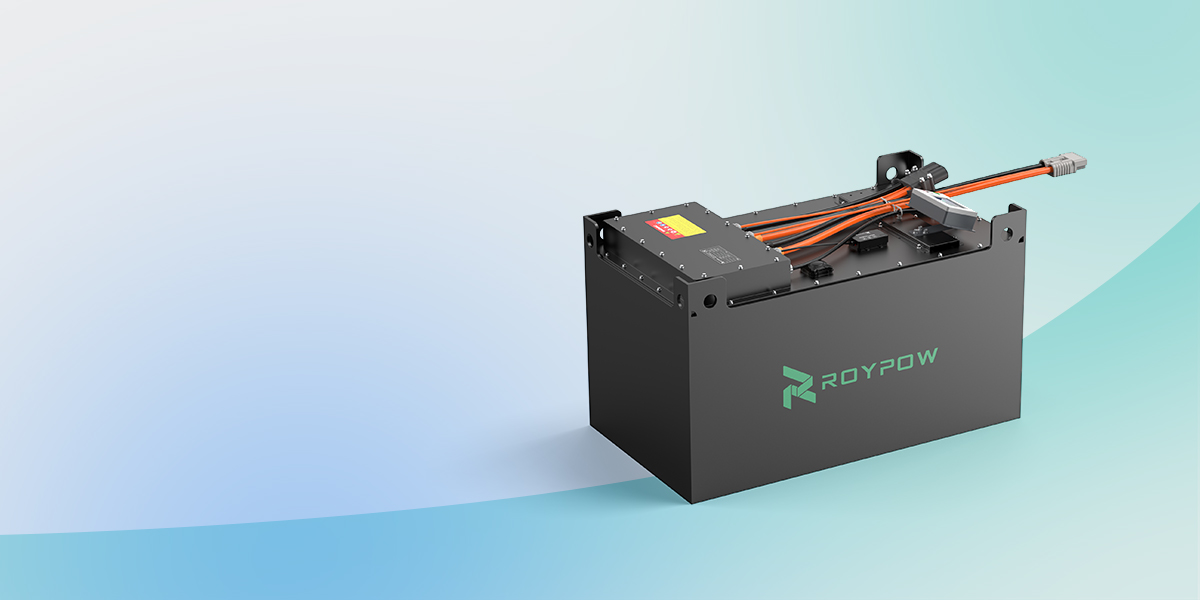
ROYPOW Technology
ROYPOW, headquartered in Huizhou, China, has established itself as the global leader in aftermarket lithium forklift batteries, drawing on over 20 years of new-energy industry expertise since its founding in 2016. The company reported revenue exceeding $140 million in 2025 and operates from a 105,000 m (1.13 million sq ft) manufacturing campus employing over 750 people. Manufacturing is certified to IATF16949 automotive-grade quality standards with fully automated production lines, advanced MES (Manufacturing Execution Systems), and a CNAS-accredited laboratory housing 200+ pieces of precision test equipment. A second manufacturing facility in Batam, Indonesia extends production capacity.
ROYPOW’s product portfolio is the broadest in the aftermarket sector, spanning 24V to 350V across both BCI and DIN standards. Seven product types address virtually every operational scenario: Standard, UL Certified, DIN Standard, Air-Cooled, Liquid-Cooled, Anti-Freeze (-20°C to 55°C), and Explosion-Proof. Core specifications include 3,500+ cycle life, approximately 10-year design life, a 5-year warranty, IP65 ingress protection, 1–2 hour fast charging, and an intelligent BMS with CAN bus integration, real-time monitoring, remote diagnostics via 4G mobile app, and over-the-air (OTA) firmware updates. The company holds 190+ patents.
ROYPOW’s global service network is a critical differentiator — particularly for Mitsubishi fleets operating across multiple regions. The company maintains 13+ offices worldwide: US locations include Commerce, CA (Americas HQ), Richardson, TX, Indianapolis, IN, Altamonte Springs, FL, and Kennesaw, GA, with a US customer hotline at +1 877 266 1118. European operations are led from Rotterdam, Netherlands (EU HQ), with additional offices in Surbiton, UK, and Darmstadt, Germany. Asia-Pacific coverage spans Chiba, Japan; Gyeonggi-do, South Korea; Sydney, Australia; and the Batam, Indonesia manufacturing facility. Further offices serve the Middle East (Erbil, Iraq), Africa (Johannesburg, South Africa), and South America (Brazil).
Certifications include UL, CE, UN38.3, RoHS, CCS, ISO, IEC, and CNAS lab accreditation. ROYPOW also produces compatible forklift battery chargers across multiple voltage platforms. Verified Mitsubishi compatibility includes the FB25ACN (ROYPOW model F80690AJ), FBC25N (F48560DP), and FB16PNT2 (F48460BV). Compatibility extends across all major forklift brands — Toyota (55+ models), Hyster (86+ models), Yale, Crown, Linde, and others — making ROYPOW the single-source solution for mixed-fleet operations. Verified case studies are available on the ROYPOW website.
EnerSys (NexSys iON)
EnerSys, headquartered in Reading, Pennsylvania, is one of the world’s largest stored energy solutions providers. The NexSys iON lithium product line targets the forklift market alongside the well-established NexSys PURE thin-plate pure-lead (TPPL) range. EnerSys brings decades of industrial battery expertise, an extensive North American and European service network, and deep existing relationships with major forklift OEMs. Products carry UL and CE certifications. EnerSys’s strength lies in serving its existing lead-acid customer base migrating to lithium within established service contracts, though pricing reflects a premium market position.
OneCharge
OneCharge, based in Irvine, California, specializes exclusively in lithium batteries for material handling equipment. The company offers products across 24V to 80V platforms with broad compatibility claims across major forklift brands. Key products hold UL 2580 certification, and the company’s North American manufacturing and assembly operations support domestic supply chain requirements. OneCharge has built a strong reputation in the US market, though its international service presence outside North America remains limited.
Green Cubes Technology
Green Cubes Technology serves the material handling, aviation ground support, and automated guided vehicle (AGV) battery markets with operations in the United States and Europe. The company produces lithium packs compatible with major forklift brands and holds UL and CE certifications. Green Cubes targets mid-to-large enterprise customers, with an expanding European footprint that provides cross-Atlantic coverage relevant for globally distributed Mitsubishi fleets.
Mitsubishi Forklift Batteries: Supplier Comparison Table
| Criteria | ROYPOW | EnerSys | OneCharge | Green Cubes |
|---|---|---|---|---|
| Voltage Range | 24V–350V | 24V–80V | 24V–80V | 24V–80V |
| BCI + DIN Standards | Both | Both | BCI primary | Both |
| UL Certification | Yes | Yes | Yes | Yes |
| CE Certification | Yes | Yes | Limited | Yes |
| Global Service Offices | 13+ countries | Multi-country | US only | US + EU |
| Product Variants | 7 types incl. anti-freeze, explosion-proof | Standard + TPPL | Standard, cold-rated | Standard |
| Cycle Life | 3,500+ | 2,000–3,000+ | 3,000+ | 2,500+ |
| Warranty | 5 years | 3–5 years | 5 years | Varies |
| Compatible Charger Line | Yes — multi-voltage | Yes | Limited | Limited |
| Remote Monitoring | 4G app + OTA | Available | Available | Available |
| Mitsubishi Models Verified | FB25ACN, FBC25N, FB16PNT2 | Multiple brands | Multiple brands | Multiple brands |
When evaluating suppliers, confirm model-specific compatibility for your exact Mitsubishi trucks (including legacy Unicarriers, Nissan, or TCM units), prioritize vendors with local service and inventory in your operating region, check availability of specialty products (cold storage, hazardous area), request reference customers in comparable applications, and compare total solution cost — battery, charger, installation support, and ongoing service.
Total Ownership Costs: Mitsubishi Forklift Battery Comparison
The financial case for upgrading Mitsubishi forklift batteries to lithium depends entirely on total cost of ownership (TCO), not the line-item purchase price that appears on the initial order. Lithium packs cost more upfront — this is undisputed. The business question is whether that premium is recovered through operational savings, and within what timeframe. For the multi-shift logistics and manufacturing environments where Mitsubishi forklifts are most commonly deployed across Asia-Pacific, North America, and Europe, the answer is consistently and measurably yes.
A complete TCO model for Mitsubishi forklift batteries encompasses seven cost categories: initial purchase (battery pack plus dedicated lithium charger plus installation), energy cost over the analysis period (driven by charging efficiency — 80–85% for lead-acid versus 95–98% for lithium), maintenance labor (lead-acid at 30–50 hours per battery per year versus lithium at zero), infrastructure costs (battery room construction, ventilation systems, extraction equipment, acid containment — all eliminated with lithium), productivity loss from battery swap downtime (15–30 minutes per swap, one or more swaps per shift, multiplied by forklift hourly productivity value), battery replacement within the analysis period (lead-acid requires one or two full replacements in an 8-year window; lithium requires none based on specs from major manufacturers such as ROYPOW, offering 3,500+ cycle life and a 5-year warranty), and disposal costs.
Eight-Year TCO Model: Mitsubishi Forklift Battery Comparison (10 Trucks, 48V, Double Shift)
| Cost Element | Lead-Acid (8 Years) | Lithium LiFePO4 (8 Years) |
|---|---|---|
| Battery Purchase | $75,000 + $75,000 (replacement yr 4) = $150,000 | $130,000 (one-time) |
| Spare Packs (multi-shift rotation) | $75,000 (10 spares at minimum) | $0 (opportunity charging) |
| Chargers | $30,000 (20 units for pack rotation) | $45,000 (10 fast chargers) |
| Installation | $4,000 | $7,500 |
| Energy Costs (8 years) | $92,000 (~82% round-trip efficiency) | $74,000 (~96% efficiency) |
| Maintenance Labor | $72,000 (~36 hrs × $25/hr × 10 × 8 yrs) | $0 |
| Infrastructure (battery room, ventilation, cranes) | $40,000 | $0 |
| Productivity Loss (swap downtime) | $64,000 | $0 |
| Disposal / Recycling | $3,500 (net of lead scrap value) | $2,200 |
| Total 8-Year TCO | ~$530,500 | ~$258,700 |
| Cost Per Truck Per Year | ~$6,631 | ~$3,234 |
This double-shift scenario shows lithium delivering approximately 51% in total savings over eight years — a differential exceeding $271,000 for the ten-truck Mitsubishi fleet. The payback period on the lithium investment premium falls within 14 to 22 months for double-shift operations and 10 to 16 months for triple-shift. Single-shift, medium-utilization Mitsubishi fleets typically reach payback in 24 to 42 months. Low-utilization single-shift operations may require 48 months or longer, where the financial case narrows but non-financial benefits still hold.
Non-financial value elements that increasingly influence procurement decisions include operational simplification (no watering, equalization, or swap logistics), workplace safety improvement (elimination of acid handling, hydrogen gas exposure, and heavy-lift battery swaps), ESG compliance contributions for corporate sustainability reporting, and the liberation of battery room floor space for productive warehouse use. For distributors, dealers, and agents building Mitsubishi battery upgrade proposals, this TCO framework provides the data foundation that finance teams require for capital approval.
Your Mitsubishi Forklift Lithium Upgrade: A Step-by-Step Plan
With the technical case and financial justification established, this section delivers the implementation roadmap that fleet operators, dealers, and distributors need to execute a Mitsubishi forklift battery upgrade from lead-acid to lithium — structured in five phases from initial assessment through ongoing optimization.
Phase 1: Fleet Assessment (1–3 Months Before Order)
Build a comprehensive inventory of every Mitsubishi electric forklift in the fleet: model designation (noting whether the truck carries a Mitsubishi, Unicarriers, Nissan, TCM, or Cat nameplate), serial number, production year, current battery specifications (chemistry, voltage, Ah capacity, physical dimensions, connector type), average daily operating hours, shift pattern, and operating environment including ambient temperature range and any hazardous-area classifications. Physically measure each battery compartment — length, width, and height in millimeters — because compartment dimensions can vary across production eras and predecessor brands even within the same model designation. Assess facility electrical infrastructure: confirm the power supply can support multiple fast chargers drawing 10–20 kW simultaneously during peak opportunity-charging periods. Define upgrade goals: runtime improvement, maintenance elimination, multi-shift enablement, cold-storage performance, or ESG compliance.
Phase 2: Supplier Selection (1–2 Months Before Order)
Shortlist two to three qualified suppliers using the evaluation criteria from the supplier comparison above. Request complete solution quotes covering: battery pack (model, voltage, capacity, ballast), lithium forklift charger, connector configuration, installation support, operator training, warranty terms, and ongoing service commitments. Evaluate total solution cost — not unit battery price in isolation. Request reference customers operating Mitsubishi or legacy Unicarriers trucks in comparable environments and shift patterns. For larger fleets (10+ trucks), negotiate a pilot program covering 2 to 5 trucks for 1 to 3 months of real-world evaluation before committing to full deployment.
Phase 3: Pilot Program (1–3 Months)
Convert two to five Mitsubishi trucks to validate performance in your specific environment. Commission each unit systematically: verify physical fit, confirm ballast weight meets counterbalance specification, connect and test the discharge connector, verify BMS communication with the Mitsubishi dashboard (if applicable), and pair the lithium charger. Train operators on the opportunity-charging model — brief top-ups during breaks or between tasks replace the deep-discharge-then-swap routine. Collect structured performance data: actual runtime versus lead-acid baseline, daily charge frequency, truck availability percentage, energy consumption per shift, and operator feedback. ROYPOW lithium batteries support 4G-enabled remote monitoring via mobile app, enabling real-time fleet data capture during pilot evaluation without manual recording.
Phase 4: Full Fleet Deployment
Roll out in two to three phased batches to manage capital expenditure and minimize operational disruption. Redesign charging layouts: distribute opportunity-charging stations near high-traffic work zones rather than relying on a centralized battery room. Update standard operating procedures and maintenance checklists — eliminate watering, equalization, and battery swap tasks. Dispose of displaced lead-acid batteries through licensed recyclers; used packs retain residual scrap value. Follow regional regulations: EPA and state-level rules in the US, EU Battery Regulation 2023/1542 and WEEE Directive in Europe, and relevant national waste battery frameworks in Japan, Australia, and other Asia-Pacific markets.
Phase 5: Ongoing Optimization
Leverage BMS telemetry and cloud-based monitoring platforms to track battery health, charging patterns, and fleet utilization trends. Optimize charging schedules to take advantage of off-peak electricity tariffs where available. Conduct annual performance reviews comparing actual degradation curves against manufacturer specifications. ROYPOW’s global service network provides “Quick Response, Fast Resolution” technical support through local teams in the US, Europe, Japan, Korea, Australia, and other key Mitsubishi forklift markets.
Electrification Trends Shaping Mitsubishi Forklift Battery Demand
The decision to upgrade Mitsubishi forklift batteries from lead-acid to lithium is more than an operational efficiency project — it represents strategic alignment with the trajectory of the global material handling industry. Understanding these macro trends helps fleet operators, distributors, and dealers position their investments within the broader industry transformation.
The global forklift battery market reached an estimated $5.28 billion in 2025, with projections from Grand View Research and Mordor Intelligence pointing toward $8.34 billion by 2032. Lithium’s share of new forklift battery shipments now stands at approximately 47.4% globally and continues to accelerate. Electric forklifts account for more than 60% of total global shipments according to ITA and WITS data. Mitsubishi Logisnext’s own strategic investments in electrification — part of the broader Mitsubishi Heavy Industries sustainability agenda — reflect this momentum, particularly across the Asia-Pacific markets where the brand holds its strongest position.
Policy and regulatory drivers are intensifying across every major region. The EU Green Deal, Carbon Border Adjustment Mechanism (CBAM), and EU Battery Regulation 2023/1542 impose new sustainability, carbon footprint disclosure, and battery recycling requirements that structurally favor lithium over lead-acid. In the United States, CARB emissions standards continue to tighten, OSHA regulations on lead exposure and hydrogen ventilation add operational costs to lead-acid use, and Inflation Reduction Act incentives partially offset lithium investment for qualifying operations. Across Asia-Pacific — Japan’s carbon neutrality pledge, South Korea’s 2050 net-zero target, China’s dual-carbon policy, and rapid industrialization in Southeast Asia — the policy direction uniformly favors electrification and cleaner energy storage technologies.
Technology trends reinforce lithium as the standard industrial power platform moving forward. IoT-enabled fleet management — where BMS data feeds directly into warehouse management and ERP systems via 4G or 5G connectivity — is evolving from a premium feature to a baseline expectation. Fast and ultra-fast charging technologies capable of delivering 80% SOC in under 45 minutes are reaching commercial maturity. The expanding AGV and AMR (autonomous mobile robot) sector demands precisely the characteristics lithium delivers: high cycle life, automated-charging compatibility, and precise state-of-charge reporting. Solid-state batteries present long-term promise but remain 5 to 10+ years from commercial viability in industrial motive power applications — a timeline that should not delay current Mitsubishi forklift battery upgrade decisions.
The aftermarket channel functions as an essential accelerator of the lead-acid-to-lithium transition. OEM lithium programs do not yet cover every Mitsubishi model or every geographic market — and they certainly do not cover the large installed base of legacy Nissan, TCM, and Unicarriers trucks still in active daily service. Legacy fleets require the aftermarket for their lithium conversion path. Aftermarket competition drives prices downward and innovation upward, expanding the addressable market. Mixed-fleet operations — running Mitsubishi alongside Toyota, Hyster, or other brands — benefit from the single-source simplicity that aftermarket manufacturers provide. Aftermarket manufacturers with $100M+ revenue and global service networks spanning multiple continents are emerging as serious, certified industry players.
For distributors, dealers, and agents evaluating the Mitsubishi forklift battery market, this represents an early-stage, high-growth business opportunity. Lithium penetration of the existing installed base remains well below 30% in most markets, meaning the addressable conversion opportunity is vast. Channel partners who establish lithium technical competence and strong supplier relationships now will build compounding advantages through the remainder of this decade.
Summary: Mitsubishi Forklift Battery Upgrade — Key Takeaways
Upgrading Mitsubishi forklift batteries from lead-acid to lithium delivers over 50% total cost of ownership savings in multi-shift operations, eliminates all routine maintenance labor, extends battery service life to 8–10+ years, and aligns fleet operations with tightening environmental regulations across every major market. The aftermarket lithium battery channel provides Mitsubishi fleet operators and their channel partners with a cost-effective, technically superior, and operationally flexible upgrade path — without replacing the forklifts themselves.
The primary markets for Mitsubishi forklifts include the United States, Canada, Germany, France, the United Kingdom, and Japan. ROYPOW has established subsidiaries and warehouses in the United States, Germany, the United Kingdom, and Japan. ROYPOW’s lithium forklift batteries are designed as high-performance aftermarket drop-in replacements compatible with the vast majority of Mitsubishi forklift models, making it easy for distributors, dealers, and end-user enterprises to source or adopt lithium upgrades. With local subsidiaries, ROYPOW provides rapid localized pre-sales consultation and after-sales service support.
Mitsubishi Forklift Battery FAQ: Answers for Fleet Operators
Can I upgrade my Mitsubishi FB-series forklift to a lithium battery without modifying the truck?
Yes. Aftermarket lithium forklift batteries are engineered as drop-in replacements for Mitsubishi FB-series and FBC-series trucks. The lithium pack matches the original battery compartment dimensions, voltage platform, and discharge connector, requiring no structural modifications to the forklift. Two changes are necessary: the lead-acid charger must be replaced with a dedicated lithium charger, and the lithium pack must include integrated ballast to maintain the rear counterweight specification. Verified compatible models include the FB25ACN, FBC25N, and FB16PNT2. Suppliers like ROYPOW (models F80690AJ, F48560DP, F48460BV), EnerSys, and OneCharge publish Mitsubishi-specific compatibility data.
How much do lithium Mitsubishi forklift batteries cost versus lead-acid replacements?
Aftermarket lithium replacement batteries for Mitsubishi 48V models typically cost $8,000 to $16,000 depending on capacity and features — approximately 2 to 2.5 times the upfront cost of an equivalent lead-acid pack. However, total cost of ownership over an eight-year period consistently favors lithium by 30% to 50% in multi-shift operations, because lithium eliminates the need for spare battery packs, maintenance labor, battery room infrastructure, and mid-life replacements. OEM lithium options, where available, typically carry a further 30% to 60% premium over aftermarket equivalents. The TCO advantage strengthens with higher utilization and multi-shift operation.
What runtime improvement can I expect from a lithium battery in my Mitsubishi forklift?
A lithium pack of equivalent or slightly lower Ah rating typically delivers equal or greater runtime compared to lead-acid, because lithium supports 80% to 100% usable depth of discharge versus a practical 80% maximum for lead-acid. Lithium also maintains consistent output voltage throughout the discharge curve, so the Mitsubishi truck operates at full performance — full lift speed, full travel speed — until the BMS low-SOC cutoff. In cold-storage environments, the runtime advantage becomes dramatic: lithium with integrated heating retains over 80% capacity at -20°C, where lead-acid loses 20% to 40%.
Is it safe to use lithium batteries in Mitsubishi forklifts operating indoors?
Yes. LiFePO4 lithium batteries are inherently safer for indoor operation than lead-acid in several important dimensions. They produce no hydrogen gas during charging (eliminating explosion risk), contain no sulfuric acid (eliminating spill and corrosion hazards), and expose workers to no lead (eliminating toxicity concerns). Industrial-grade LiFePO4 packs incorporate multi-layer safety systems: cell-level pressure relief valves, module-level thermal barriers, and pack-level BMS with continuous monitoring, automatic disconnection on fault detection, and active thermal management. IP65-rated enclosures protect against dust and water ingress.
Do lithium batteries for Mitsubishi forklifts require UL listing in the United States?
No single federal law mandates UL listing for all forklift batteries in every US application, but UL listing is strongly recommended and increasingly required in practice. Facility insurance underwriters, local building codes referencing NFPA standards, and corporate procurement policies commonly require UL 2580 certification for lithium batteries used in indoor industrial trucks. Major aftermarket suppliers — including ROYPOW, EnerSys, OneCharge — offer UL-listed products compatible with Mitsubishi models. Always verify current certification status for the specific battery model and confirm with your insurer before finalizing a purchase.
What certifications are required for Mitsubishi forklift batteries in the European market?
In the EU, lithium forklift batteries must carry CE marking demonstrating conformity with the Machinery Directive, Low Voltage Directive, and EMC Directive. UN38.3 transport testing certification is mandatory for lithium batteries shipped into or within Europe. The EU Battery Regulation 2023/1542, being phased in through 2027, introduces additional requirements: carbon footprint declarations, recycled content minimums, due diligence obligations, and digital battery passports. Suppliers serving the European Mitsubishi market should offer DIN-standard battery configurations alongside CE and UN38.3 certifications. ROYPOW, EnerSys, and Green Cubes Technology maintain European offices and CE-certified product lines aligned with current and emerging EU requirements.
Can lithium batteries power Mitsubishi forklifts in -25°C cold-storage freezers?
Yes, but only purpose-built anti-freeze or heated lithium battery variants should be deployed in these conditions. Standard lithium cells lose significant capacity below -10°C and should not be charged below 0°C without internal heating. Specialized cold-storage Mitsubishi forklift batteries integrate heating modules that maintain cell temperature above safe operating thresholds, delivering reliable performance at -20°C to -30°C (-4°F to -22°F) with over 80% capacity retention. These heated variants are available from select aftermarket manufacturers specifically for Mitsubishi counterbalance and warehouse equipment models deployed in frozen-food distribution, pharmaceutical cold chain, and other temperature-controlled logistics environments.
Will legacy Unicarriers or Nissan forklift models accept the same batteries as current Mitsubishi trucks?
Battery compatibility is determined by the specific truck’s voltage platform, battery compartment dimensions, and connector type — not by the brand badge. Some legacy Unicarriers and Nissan models share identical battery compartments with current Mitsubishi equivalents; others differ significantly. Aftermarket suppliers with broad cross-brand compatibility databases can confirm exact fitment. ROYPOW, for example, lists compatibility for both Mitsubishi models (FB25ACN, FBC25N, FB16PNT2) and Unicarriers models (BXC50N, RPX60). Always provide the forklift serial number and physically measured compartment dimensions when requesting quotes, as production-era differences may affect fitment even within the same model designation.
How do I find a Mitsubishi forklift battery supplier with service coverage in Asia-Pacific?
Asia-Pacific is the primary market for Mitsubishi forklifts, making regional service access critical. Prioritize aftermarket suppliers with established offices, inventory positions, and technical support teams in the Asia-Pacific region. ROYPOW maintains offices in Chiba (Japan), Gyeonggi-do (South Korea), Sydney (Australia), and a manufacturing facility in Batam (Indonesia), providing localized pre-sales consultation and after-sales service across the region. EnerSys also maintains Asia-Pacific operations through its global network. Confirm local inventory availability, service response time commitments, and the ability to support both current Mitsubishi and legacy Unicarriers/Nissan models in your specific market before making a supplier commitment.