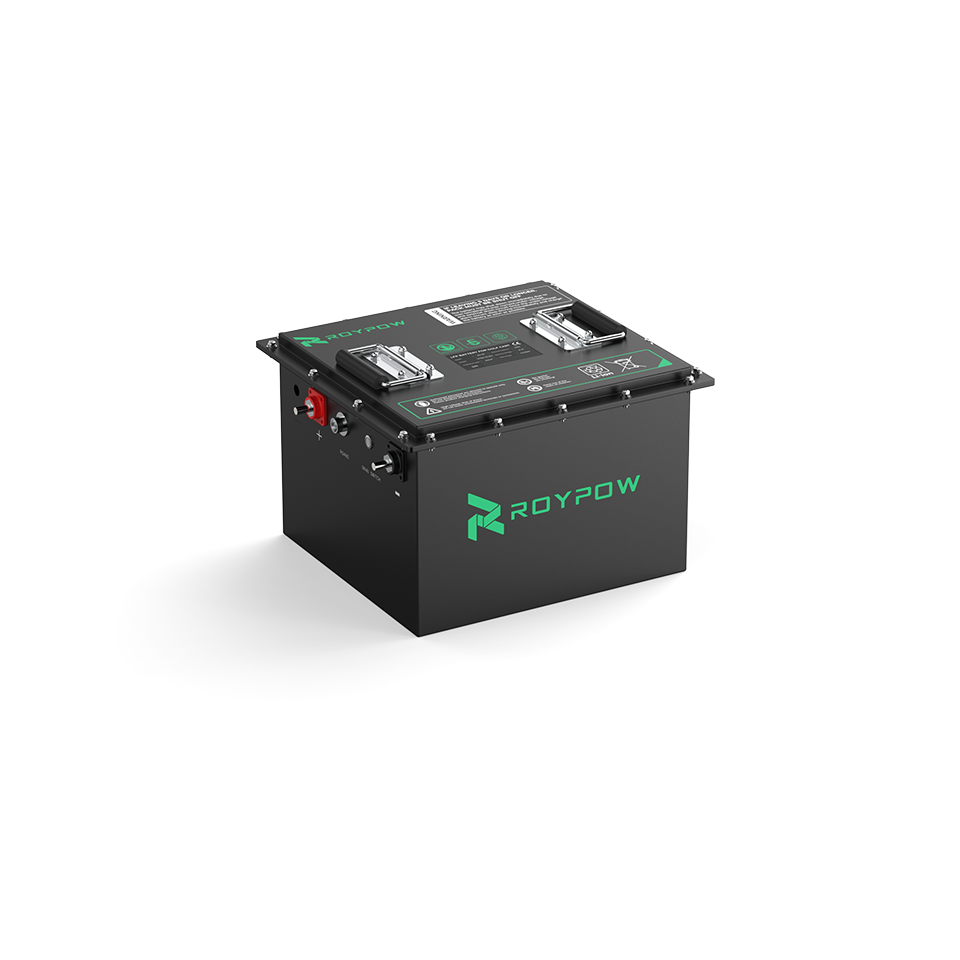
Does your golf cart feel increasingly powerless? Does it run out of battery after just a few rounds, even right after charging? Do you remember the tedious operation and pungent smell the last time you added distilled water to the batteries? Not to mention the painful experience of having to spend thousands on a whole new set of batteries every 2–3 years.
These are the typical frustrations caused by traditional lead-acid batteries, which can no longer meet the modern user’s demands for convenience and performance.
Currently, upgrading golf carts with lithium batteries is widely available. This article will help you understand the value of lithium battery upgrades for your golf cart.
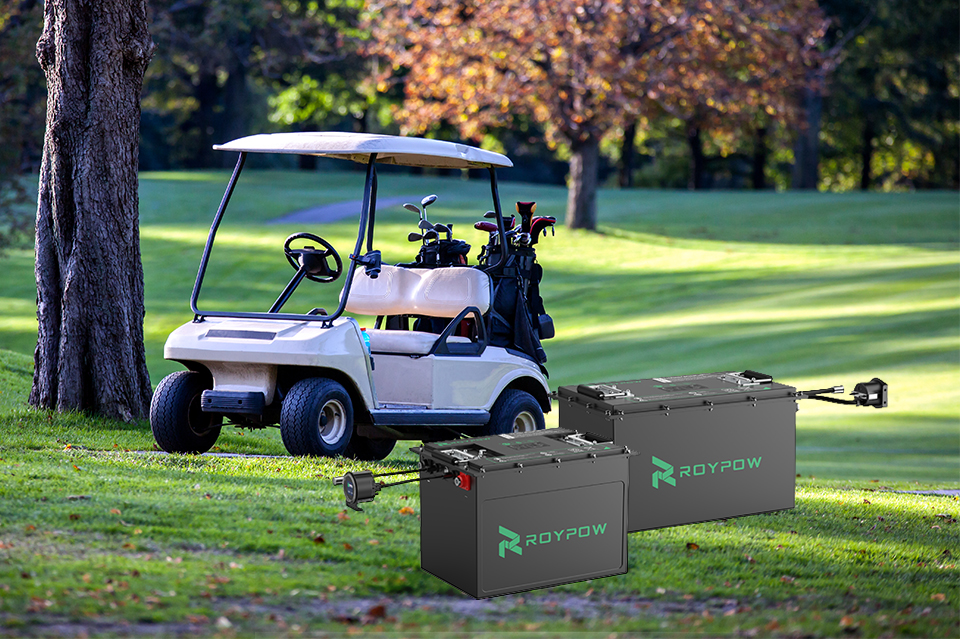
Why Upgrade? The Advantages of Lithium Golf Cart Batteries
The transition from lead-acid to a lithium battery for a golf cart is not merely about changing a component; it is about upgrading the efficiency of your entire fleet. Here is why the industry is moving toward lithium.
1. Longevity and Exceptional Durability
Lead-acid batteries typically last only 300–500 cycles, whereas high-quality lithium batteries like ROYPOW products can achieve over 4,000 cycles. This means that while lead-acid batteries may need replacement every 2–3 years, lithium batteries can easily last 5–10 years, effectively outlasting two or three sets of lead-acid alternatives. This contributing to a lower total cost of ownership in the long run.
2. Strong Performance and Longer Range
l Lithium-ion golf cart battery keeps a stable voltage throughout the discharge cycle, so that your cart can deliver strong power and speed regardless of the remaining charge.
l The higher energy density enables them to store more power in the same volumes, permitting you to travel farther on a single charge without worrying about running out of power on the return trip.
3. Lightweight and Space-Saving
A set of lead-acid units can weigh over 100 kg, while a lithium-ion battery pack of the same capacity weighs only about one-third of that. The lighter weight of vehicles brings improved energy efficiency while making vehicle installation and handling processes more accessible. The small dimensions of lithium-ion batteries allow vehicle owners to modify their vehicles.
4. Rapid Charging and Charge Anytime
l Lead-acid models typically require 8–10 hours to fully charge. They must be charged immediately after deep discharge; otherwise, they risk serious damage.
l LiFePO4 golf cart batteries support fast charging and have no memory effect. You can charge them as needed, without waiting for the battery to drain.
5. Eco-Friendliness and Safety
l The lithium golf cart batteries are environmentally friendly solutions as they do not contain lead or cadmium.
l The built-in BMS provides multiple protections against overcharging, over-discharging, short circuits, and overheating.
How Much Does an Upgrade Cost?
While the operational benefits are clear, the upfront expenditure is the primary hesitation for many businesses.
1. Average Price Range
The initial capital expenditure (CAPEX) for converting golf carts with lithium golf cart batteries is higher than swapping in new lead-acid units. Generally, a complete lithium upgrade kit ranges from $1,500 to $4,500 per vehicle, depending on the specifications.
2. Key Factors Influencing Cost
The cost of lithium golf cart batteries depends on voltage and capacity levels. The price may rise when you choose premium brands that implement automotive-grade cells and strong BMS systems. The professional installation service will also add to your total expenses.
When is the Best Time to Upgrade?
Not every vehicle in a fleet requires an immediate upgrade. Managers should triage their fleets based on the following criteria.
Situations Where Upgrading is Highly Recommended
(1) Your lead-acid batteries are nearing end-of-life: When your old batteries can no longer maintain basic range and need replacement, it’s the perfect time to switch to lithium.
(2) High frequency of use: If used for commercial rentals on golf courses, resort shuttle services, or daily commuting within large communities, the durability and fast-charging features of lithium batteries directly enhance operational efficiency and user experience.
(3) Extreme emphasis on convenience: If you want to completely say goodbye to maintenance tasks like adding water and worrying about battery sulfation, and pursue a “install and forget” experience.
(4) Focus on long-term investment: You are willing to invest more upfront to ensure no battery concerns for the next 5–10 years, achieving a true once-and-for-all solution.
Situations Where Upgrading Can Be Postponed
(1) Existing lead-acid batteries are in good condition, and usage is very infrequent: If you use your cart only a few times a year and the current batteries work fine, the urgency to upgrade is low.
(2) Extremely tight current budget: If the initial purchase cost is your sole and primary consideration.
(3) The golf cart itself is very old: If the vehicle’s residual value is already low, investing in an expensive lithium battery might not be economical.
Action Guide: From Selection to Installation
Successfully migrating a fleet demand careful specification matching and professional execution.
How to Choose a Lithium Golf Cart Battery
(1) Determine specifications: First, verify the system voltage (36V, 48V, or 72V). Next, select the capacity (Ah) based on daily mileage needs. Finally, measure the physical battery compartment to ensure the lithium pack fits.
(2) Prioritize brands with a good market reputation and professional technical background.
(3) Don’t just look at the price; focus on the product’s cycle life rating, whether the BMS protection functions are comprehensive, and the detailed warranty policy.
Professional Installation and Considerations
l The charger must be replaced! Absolutely avoid using the original lead-acid battery charger to charge lithium batteries! Otherwise, it can easily cause a fire.
l Old lead-acid batteries are hazardous waste. Please dispose of them through professional battery recycling agencies.
Lithium Golf Cart Battery from ROYPOW
When selecting a partner for fleet upgrades, ROYPOW stands out as the premier choice for reliability, performance, and superior total cost of ownership.
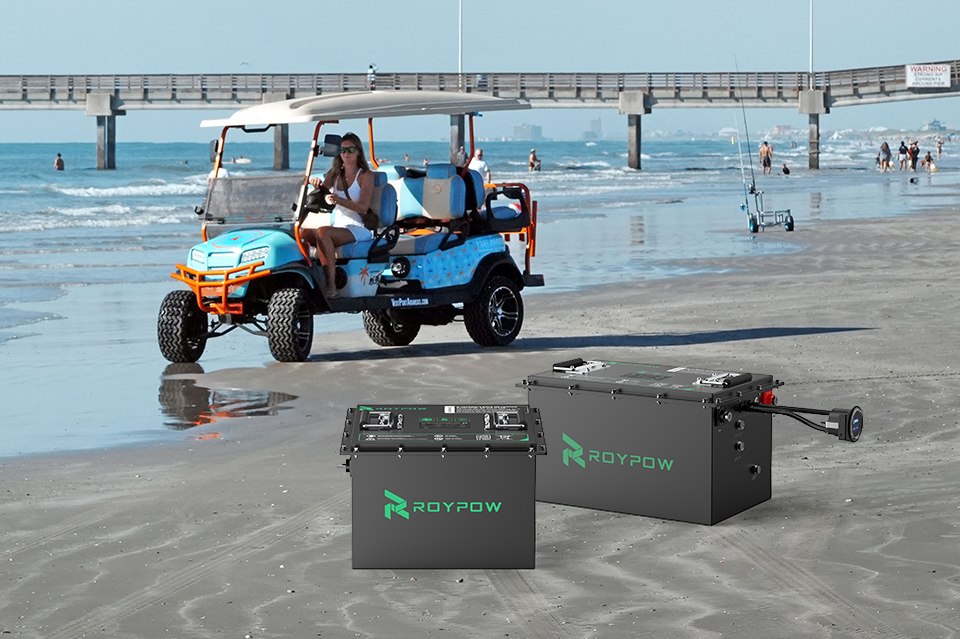
l For standard fleet operations requiring extended runtime, our 48V lithium golf cart battery is the gold standard. With a substantial 150Ah capacity, it is designed for multi-round golf days or extended shifts in facility management, which can withstand the vibration and temperature variances common in outdoor commercial environments.
l For high-performance vehicles, utility tasks, or hilly terrain, the 72V 100Ah battery delivers the necessary power without the sag experienced with traditional batteries.
Ready to Power your Fleet with Confidence and Efficiency?
Contact ROYPOW today. Our batteries are engineered to meet the rigorous demands of daily use, empowering your carts to perform consistently.