
Forklift fleet operators face a critical challenge: how to balance performance, reliability, and cost efficiency. While many focus on the initial forklift battery price, the real financial impact comes from maintenance, downtime, energy consumption, and replacement frequency.
To truly reduce forklift battery total cost of ownership TCO, operators must evaluate battery affordability and lifetime across the entire lifecycle. A strategic shift from short term cost thinking to lifecycle optimization can dramatically improve fleet productivity and capital efficiency.
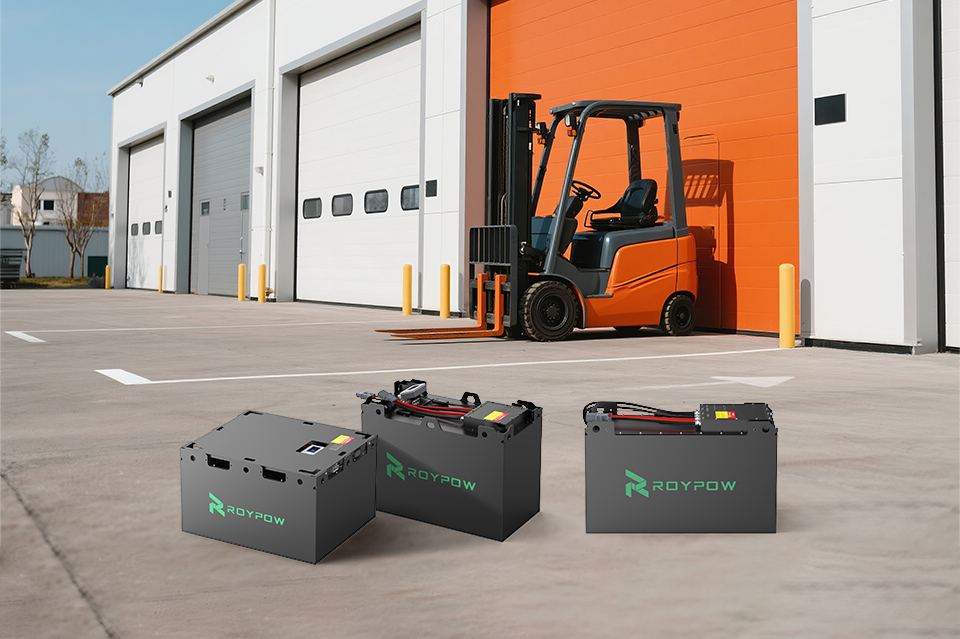
Understanding Forklift Battery Total Cost of Ownership
The total cost of ownership of a forklift battery includes:
- Initial purchase cost
- Energy consumption efficiency
- Maintenance and labor
- Downtime and productivity loss
- Replacement frequency
- End of life disposal or recycling
These costs vary based on battery chemistry, cell quality, operating intensity, charging habits, and environmental conditions.
When forklift batteries are treated as long term assets rather than consumables, operators gain greater cost predictability and improved capital planning.
How to Minimize Forklift Battery TCO
Reducing forklift battery lifecycle cost requires optimization across multiple factors:
- Battery chemistry
- Upfront investment structure
- Maintenance and predictive management
- Charging and discharging strategy
- Usage intensity
- Storage conditions
- Staff training
ROYPOW integrates these elements into a systematic battery cost optimization framework designed to maximize service life while reducing hidden expenses.
1. Battery Chemistry Matters: Why LFP Lithium Outperforms Lead Acid
Traditional lead acid forklift batteries have lower initial prices but generate higher lifetime costs due to:
- Frequent watering and maintenance
- Lower charge efficiency
- Shorter cycle life
- Higher replacement frequency
In contrast, LiFePO4 lithium forklift batteries offer:
- Three to five times longer cycle life
- Maintenance free operation
- Higher energy efficiency
- Stable voltage output
- Reduced labor cost
High quality Grade A automotive LFP cells further enhance consistency, slow aging, and deliver long term reliability in multi shift operations. Instead of frequent replacement, lithium batteries become durable productivity assets.
2. Reducing Upfront Investment Without Sacrificing Performance
High initial battery investment can strain fleet budgets, especially for large warehouses or logistics centers.
ROYPOW improves cost efficiency through:
- Bulk procurement discounts
- Optimized 280Ah and 314Ah high density cell configurations
- Semi knocked down SKD supply model that reduces shipping volume and tariff exposure
This structure lowers capital expenditure while preserving long term ROI potential.
3. Predictive Maintenance with Cloud Monitoring
Unexpected battery failure creates costly downtime and operational disruption.
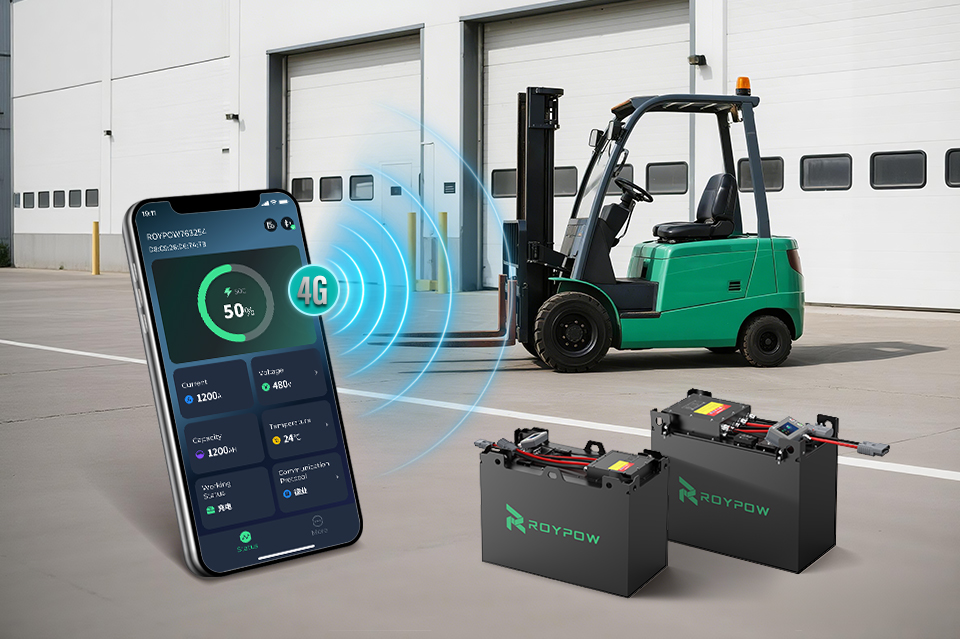
ROYPOW integrates:
- 4G enabled cloud monitoring
- Intelligent Battery Management System
- Real time performance tracking
- Remote diagnostics
- OTA firmware updates
With network coverage in 136 countries, operators gain visibility into battery health, temperature, cycle count, and SOH status. Early issue detection extends service life and minimizes unplanned downtime, protecting both productivity and budget stability.
4. Data Driven Battery Replacement Strategy
LiFePO4 forklift batteries typically retain at least 70 percent capacity after 3500 cycles and often operate reliably for 8 to 10 years.
However, aging beyond 10 years increases safety and performance risks.
ROYPOW lithium forklift batteries offer:
- 5 year or 10000 hour warranty
- Design life exceeding 10 years
- Cloud based SOH monitoring
- Replacement recommendation when SOH reaches 70 percent
This data driven strategy prevents premature replacement while avoiding safety risks associated with aging batteries.
5. Optimized Charge and Discharge for Maximum Lifespan
Deep cycling accelerates battery degradation and increases long term replacement costs.
Best practice recommends maintaining a 25 percent to 80 percent SOC window.
In typical operations of one cycle per day and 300 working days annually:
- Service life can extend from 5 years to 10 years
- Lifetime energy output can double
- Unit energy cost can decrease by up to 50 percent
ROYPOW intelligent BMS enables customizable shallow cycling parameters, ensuring long term battery health and maximum cost efficiency.
6. Smart Charging with Dedicated Forklift Battery Chargers
Improper charging is one of the most common causes of lithium battery degradation.
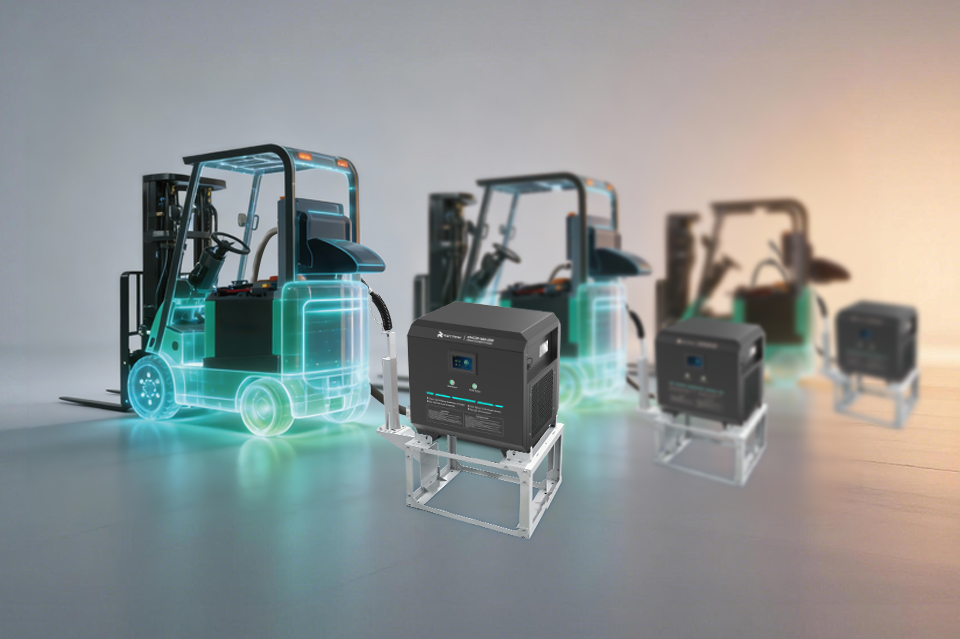
ROYPOW dedicated smart chargers:
- Support 30V to 100V wide voltage range
- Adjust charging current based on temperature and battery status
- Enable safe, controlled fast charging
- Ensure communication between charger and battery
This precision charging approach reduces aging, enhances safety, and lowers lifecycle cost.
Learn more about ROYPOW Forklift Battery Chargers.
7. Proper Storage to Prevent Capacity Loss
Extreme storage temperatures accelerate capacity fade and increase premature replacement risk.
Recommended storage conditions:
Short term up to one month
- Temperature range: minus 20°C to 45°C
Long term up to one year
- Optimal range: 0°C to 35°C
Maintaining batteries within defined temperature windows protects asset value during idle periods.
8. Staff Training Reduces Lifecycle Cost
Improper battery handling increases maintenance cost and shortens service life.
ROYPOW provides structured online and offline training programs covering:
- Safe battery operation
- Charging best practices
- Maintenance protocols
- Emergency response procedures
Well trained staff can reduce lifecycle cost by up to 20 percent while improving operational safety and compliance.
Advanced Solution for Extreme Conditions: Liquid Cooled Lithium Forklift Batteries
High frequency, multi shift, and high temperature operations accelerate lithium battery aging.
To address this challenge, ROYPOW offers liquid cooled lithium forklift batteries.
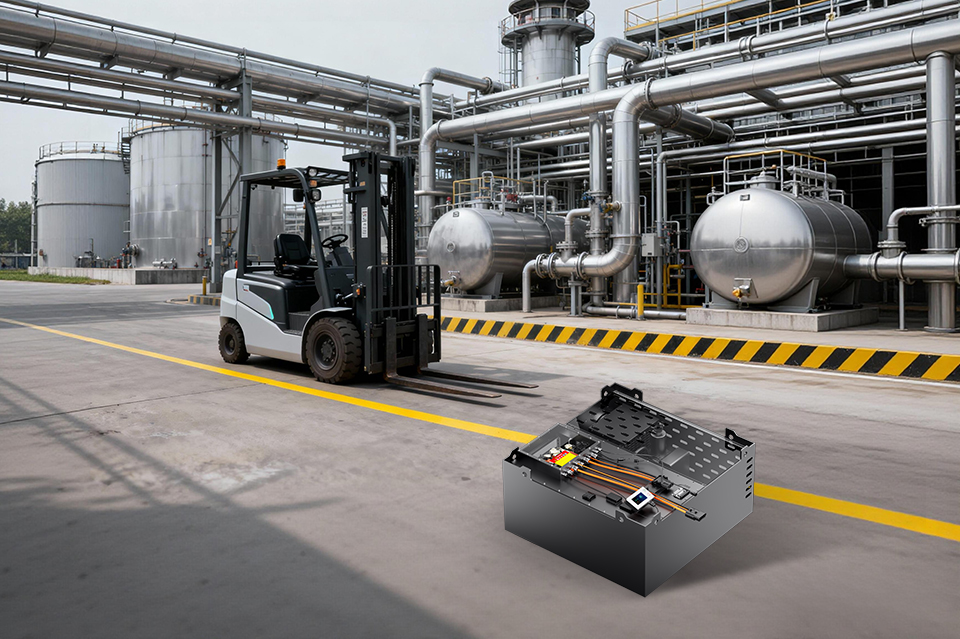
The liquid cooling system maintains cell temperatures between 25°C and 35°C during heavy load operation.
Testing at 0.5C and 1C discharge confirms:
- Minimal temperature rise
- Stable performance under stress
- 50 to 60 percent longer service life
- Up to 6000 cycles
- Over 95 percent capacity retention
With an eight year warranty, operators gain predictable budgeting and reduced long term capital risk.
Conclusion: A Systematic Approach to Forklift Battery Cost Optimization
Lowering forklift battery total cost of ownership requires more than selecting the lowest purchase price.
It requires:
- Choosing high quality LiFePO4 chemistry
- Implementing predictive maintenance
- Optimizing charging strategy
- Monitoring real time health data
- Training personnel
- Managing storage conditions
Through continuous innovation and system level optimization, ROYPOW delivers lithium forklift battery solutions that extend service life, reduce replacement frequency, and improve long term ROI.
For operators seeking to reduce forklift battery cost, increase uptime, and stabilize capital planning, lifecycle optimization is the competitive advantage.