Lithium Battery Solutions
for Electric Very Narrow Aisle Forklifts
Narrow Aisle Forklift Batteries
As the global industry moves from lead-acid to lithium, ROYPOW leads the transition, helping forklift fleet operators increase material handling efficiency, reduce total cost of ownership, and maximize ROI across various applications, including distribution centers, manufacturing plants, and cold storage facilities.
ROYPOW lithium forklift batteries cover 24–80 V, with a maximum of 350 V, supporting Class I, II, and III forklifts from light-duty to heavy-capacity operations. UL- and CE-certified, our batteries offer flexible, customer-specific customization, providing reliable, high-performance power for the US and European forklift markets.
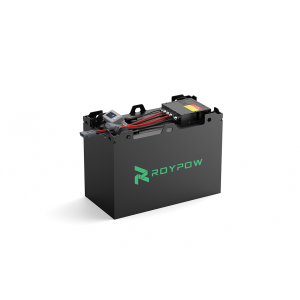
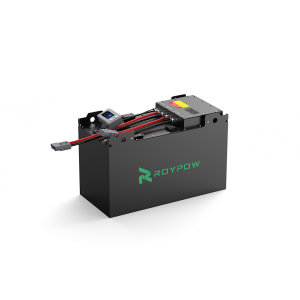
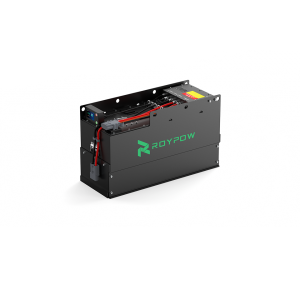
Explore ROYPOW Lithium Batteries for Class II VNA Forklifts
High-Performance VNA Forklift Batteries Built for All Work Environments
High-Density Warehouses
Supports continuous and stable energy output for high utilization operations, helping reduce downtime and maintain efficient logistics flow.
Manufacturing & Production Facilities
Eliminates routine battery watering and maintenance, helping reduce manual intervention while keeping equipment ready for daily material handling tasks.
Narrow Aisle Storage Facilities
Maximizes energy efficiency during frequent stop-and-go operations, helping extend productive operating time between charges.
E-commerce Fulfillment Centers
Supports fast opportunity charging and sustained energy availability, enabling higher productivity during peak order periods without disrupting operational schedules.
Third-Party Logistics (3PL) Centers
Provides dependable power across shared fleets, simplifying battery management while improving operational efficiency and reducing overall ownership costs.
Delivers high energy efficiency, stable and consistent power, and excellent thermal stability, reducing the total cost of ownership over the battery’s lifespan.
High Energy Density
Delivers more usable energy within a compact structure, maximizing space efficiency in VNA forklift battery compartments.
Long Lifespan
Over 10 years of design life and 3,500+ cycles—two to three times that of lead-acid batteries—ensuring reliable performance while reducing the need for frequent, costly battery replacements.
Fast & Opportunity Charging
Fully charged in 1–2 hours during brief breaks — with no dedicated charging shifts or battery swapping required. Your fleet keeps moving around the clock.
Ultra-Safe
Effectively prevents thermal runaway with the integrated fire suppression system, ensuring maximum safety for operators and equipment, minimizing potential downtime and costs.
Maintenance-Free
No watering, equalization, or corrosion cleanup. ROYPOW lithium batteries eliminate routine maintenance, reducing labor requirements and simplifying battery management.
Powered by Advanced Technology
Intelligent BMS
Protects the forklift battery while maximizing runtime, extending lifespan, and reducing energy and replacement costs.
Real-Time Monitoring of Battery Status
Real-Time Communication Through CAN
Multi-Level Safety Protection
Full-Time Cell Balancing
Charge & Discharge Efficiency Optimization
Fault Alarm
4G Cloud Platform
Manage and monitor the forklift fleet anytime, anywhere, while reducing downtime, maintenance costs, and improving operational efficiency.
Smart Management via App & Web
Real-Time Monitoring of Battery Status
SIM-Free Network Connectivity in 135+ Countries
Remote Diagnosis and Maintenance
Equipment Position Tracking & Locking
OTA Updates
ROYPOW, Your Trusted Partner for Narrow Aisle Forklift Batteries
R&D Strength
Our team of 200+ experts, with an average of 20 years' experience in the new energy sector, holds 36O+ patents and drives innovation in high-performance lithium-ion forklift battery solutions.
Advanced Manufacturing
Two advanced factories in China (8Gwh) and lndonesia (2GWh), featuring fully automated production lines and smart manufacturing management systems, ensure high-quality forklift batteries and a reliable global supply.
Global Presence & Support
With 17 subsidiaries and offices worldwide, ROYPow ensures on-time delivery and provides responsive, comprehensive local technical and service support for all forklift fleets, guaranteeing seamless operation and long-term reliability.
Compatible with Leading Narrow Aisle Forklift Brands
Designed for seamless integration with most major narrow aisle forklift models
Case
Empowering Yale, Hyster & TCM Forklift Operations in Europe with ROYPOW Lithium Forklift Batteries
DATEMay-30, 2025
LOCATIONGERMANY
Fast Delivery & Local Support: How ROYPOW Lithium Forklift Batteries Empower a Linde Dealer in Poland
DATEMar 10, 2026
LOCATIONPoland
From Lead-Acid to Lithium: Reducing Maintenance and Improving Efficiency for a Yale Forklift in Germany
DATEApr 24, 2026
LOCATIONGERMANY
ROYPOW Lithium Battery Training at Hyster Czech Republic A Step Forward in Forklift Technology-0
DATEDec 13, 2024
LOCATIONCzech Republic
ROYPOW Lithium Batteries Power Reliable Forklift Operations in Cold Environments
DATEJun 18, 2026
LOCATIONItaly
1515
Warehouses Worldwide
Fast Shipping and Localized Support
China
South Korea
United States
(CA / TX / GA / FL / IN)
United Kingdom
Germany
Netherlands
Japan
Indonesia
Brazil
Australia
Become a ROYPOW Forklift Battery Dealer
ROYPOW has established 17 subsidiaries and offices worldwide, enabling it to quickly provide you with service and technical support globally.
A narrow aisle forklift is a type of material handling equipment designed to operate efficiently in warehouse aisles with limited space. Compared with standard counterbalance forklifts, narrow aisle forklifts generally have a smaller turning radius and are designed to maximize warehouse storage density.
2. What type of battery is best for Class II narrow aisle forklifts?
Lithium-ion batteries are the best choice for Class II VNA forklifts. Compared with traditional lead-acid batteries, lithium batteries offer faster charging, higher energy efficiency, and consistent power output, making them ideal for multi-shift warehouse operations.
3. How long do lithium narrow aisle forklift batteries last?
ROYPOW lithium forklift batteries are designed for a long service life, typically lasting over 3,500 charge cycles depending on operating conditions. This is significantly longer than traditional lead-acid batteries.
4. Are lithium forklift batteries safe for indoor warehouse use?
Yes. ROYPOW lithium batteries are built with advanced Battery Management Systems (BMS) and safety protections to ensure stable operation. They also eliminate acid leakage and reduce maintenance risks, making them suitable for indoor warehouse environments.
5. Can narrow aisle lithium batteries be used in existing forklifts (retrofit)?
Yes. ROYPOW lithium batteries can be used in most existing electric VNA forklifts as a retrofit solution, depending on voltage, compartment size, and system compatibility. Custom battery dimensions are also available for specific warehouse equipment.
6. How long does it take to charge a VNA lithium forklift battery?
Charging time depends on battery capacity and charger power, but lithium VNA batteries typically allow much faster charging than lead-acid batteries. Charging during breaks can quickly restore energy for continued operation in multi-shift warehouse environments.
7. Do VNA lithium forklift batteries require maintenance?
No. Lithium VNA forklift batteries are virtually maintenance-free compared with lead-acid batteries. They do not require water refilling, acid checking, or equalization charging, which helps reduce daily maintenance workload and operating costs in warehouse environments.
8. What are the benefits of lithium-ion batteries for narrow aisle forklifts?
Key benefits include:
Fast and opportunity charging No routine watering Low maintenance requirements High charging efficiency Consistent power output Long service life Reduced battery-related downtime No battery swapping room required in many applications
These benefits can be particularly valuable in high-throughput warehouses where forklifts operate for extended periods.
9. Can I opportunity charge a narrow aisle forklift battery?
Yes. Lithium-ion batteries are particularly well suited for opportunity charging. Operators can charge the forklift during scheduled breaks, lunch periods, or shift changes. This can help keep the forklift available throughout the working day without requiring a dedicated battery replacement.
10. What voltage is commonly used for narrow aisle forklift batteries?
Common forklift battery voltages include 24V, 36V, 48V, and 80V. The appropriate voltage depends on the specific forklift model and electrical system. A replacement battery should always match the voltage requirements specified by the forklift manufacturer.
11. How do I choose the right battery capacity for a narrow aisle forklift?
Battery capacity should be selected based on the forklift’s voltage, operating hours, load requirements, duty cycle, charging opportunities, and shift schedule. Choosing a battery with insufficient capacity may increase downtime, while an oversized battery may add unnecessary cost and weight.
12. Can narrow aisle forklift batteries be used for multi-shift operations?
Yes. Lithium-ion batteries are particularly suitable for multi-shift warehouse operations because they support fast and opportunity charging. Instead of removing and replacing batteries between shifts, operators can often recharge the battery during planned breaks.
13. What should I consider when buying a narrow aisle forklift battery?
Before purchasing a battery, consider:
Forklift make and model Battery voltage Battery capacity Battery dimensions Battery weight Connector type Charging requirements Daily operating hours Number of shifts Charging opportunities Operating temperature Battery management system Warranty and after-sales support
14. Are lithium-ion narrow aisle forklift batteries more expensive than lead-acid batteries?
The initial purchase price of a lithium-ion battery is generally higher than that of a conventional lead-acid battery. However, the total cost of ownership can be lower in some applications because lithium-ion batteries can offer longer service life, higher charging efficiency, lower maintenance requirements, and reduced battery-changing labor and infrastructure.
15. Can narrow aisle forklift batteries be used in cold storage warehouses?
Some lithium-ion forklift batteries can be designed for cold-storage applications, but standard lithium-ion batteries may have reduced charging and operating performance at very low temperatures. For refrigerated or freezer warehouses, choose a battery specifically engineered and rated for the required temperature range.
Read MoreRead Less
Subscribe to our newsletter
Get the latest ROYPOW's progress, insights and activities on renewable energy solutions.
Tips: For after-sales inquiry please submit your information here.
Start Your FREE Subscription Today!
Get the latest ROYPOW's progress, insights and activities on renewable energy solutions.






 Intelligent BMS
 4G Cloud Platform


 Empowering Yale, Hyster & TCM Forklift Operations in Europe with ROYPOW Lithium Forklift BatteriesDATE May-30, 2025LOCATION GERMANY
 Fast Delivery & Local Support: How ROYPOW Lithium Forklift Batteries Empower a Linde Dealer in PolandDATE Mar 10, 2026LOCATION Poland
 From Lead-Acid to Lithium: Reducing Maintenance and Improving Efficiency for a Yale Forklift in GermanyDATE Apr 24, 2026LOCATION GERMANY
 ROYPOW Lithium Battery Training at Hyster Czech Republic A Step Forward in Forklift Technology-0DATE Dec 13, 2024LOCATION Czech Republic
 ROYPOW Lithium Batteries Power Reliable Forklift Operations in Cold EnvironmentsDATE Jun 18, 2026LOCATION Italy